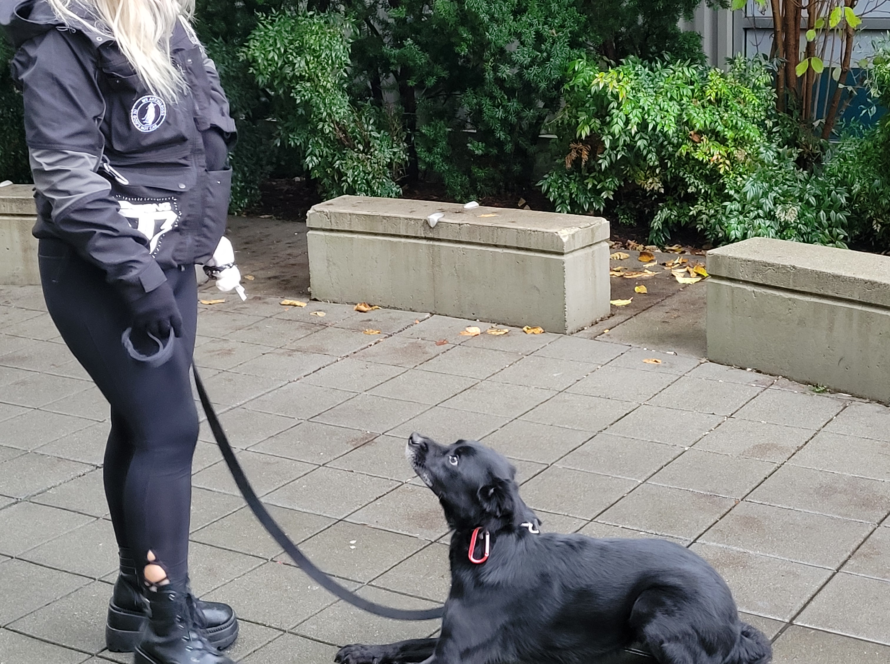
You love your dog. You’re committed to helping them succeed. You’ve watched the videos, bought the treats, practiced the exercises, and promised yourself that this time you’re really going to stick with the training plan.
No one can argue that you’re not plenty dedicated.
So why isn’t the training working?
Dedication matters enormously in dog training. In fact, without some level of commitment from the human on the other end of the leash, even an excellent training program can fall apart.
But dedication by itself isn’t enough.
You can practice the wrong thing every single day and simply become very good at practicing the wrong thing.
Effective dog training requires more than effort. It requires clarity, consistency, and communication.
If you’ve been working hard with your dog but feel like you’re spinning your wheels, one of these three ingredients may be what you’re missing.

1. Clarity: Does Your Dog Actually Know What You Want?
Humans have a bad habit of assuming dogs understand more than they actually do.
We say things like:
“He knows better!”
“She knows what sit means!”
“He knows he isn’t supposed to pull.”
“She knows she should come when I call.”
But does your dog actually understand the behavior you expect in this particular situation?
Dogs aren’t born understanding human rules. Even behaviors that seem obvious to us have to be taught.
Take leash walking.
You may know that your dog is supposed to walk beside you without dragging you toward every interesting smell. Your dog, however, may have learned something completely different:
Pulling makes me move forward.
From the dog’s perspective, pulling might be working perfectly.
Before worrying about whether your dog is being stubborn, dominant, difficult, or disobedient, ask a simpler question:
Have I made the correct answer unmistakably clear?
Good training creates a system the dog can understand.
That means teaching behaviors deliberately, rewarding correct choices, preventing unwanted behaviors from being endlessly rehearsed, and making sure the dog understands how to succeed.
Clarity also means recognizing that dogs don’t generalize particularly well.
A dog who can perform a beautiful down-stay in your kitchen may genuinely struggle to perform the same behavior at a busy park.
That doesn’t necessarily mean your dog is refusing to listen.
It may mean you haven’t finished teaching the behavior yet.
2. Consistency: Do the Same Rules Apply Tomorrow?
This is where dedication and consistency get confused.
You can be extremely dedicated to your dog while still being inconsistent.
Maybe pulling on the leash gets corrected during a training session—but when you’re running late for work, your dog gets to tow you toward the car.
Maybe jumping isn’t allowed when you’re wearing nice clothes, but it’s cute when you come home in sweatpants.
Maybe your dog isn’t supposed to bark at the window, except sometimes you’re busy and let it continue for twenty minutes.
From the dog’s perspective, the rules keep changing.
Dogs learn through patterns.
If a behavior works sometimes, many dogs will continue trying it.
Think about a slot machine. It doesn’t pay out every time someone pulls the lever. The possibility that this might be the time it works is exactly what keeps people playing.
Dog behavior can, and often does, work the same way.
If jumping gets attention one out of every five times, jumping may remain worth trying.
If pulling occasionally gets your dog to the exciting smell faster, pulling can remain valuable.
Consistency doesn’t mean becoming rigid or spending every waking moment conducting formal obedience drills.
It means creating predictable rules your dog can understand.
When the answer to a question changes depending on your mood, schedule, location, or patience level, training becomes much harder than it needs to be.
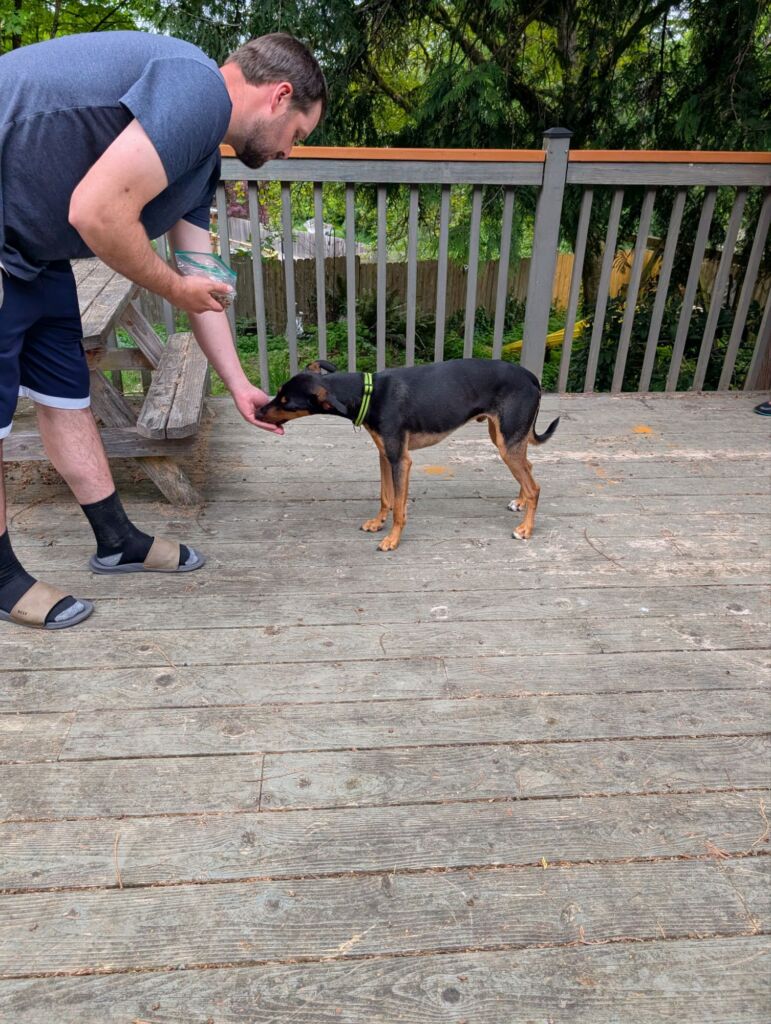
3. Communication: Training Has to Make Sense to the Dog
Dog training is ultimately a conversation between two different species.
Unfortunately, humans tend to do most of the talking. We repeat commands, raise our voices, explain things in complete English sentences and say our dog’s name twelve or more times.
Meanwhile, the dog is paying attention to something completely different: your body position, the leash, environmental pressure, reinforcement history, movement, timing, and consequences.
Effective dog training requires a communication system that makes sense to the dog, not just to the person.
At Black Magic Dog Training, we use a balanced approach to training. That means we aren’t limited to a single tool or technique.
We can use food, play, praise, and/or a mix thereof. The goal isn’t to fit every dog into one training ideology. The goal is to figure out what helps your dog understand what we’re trying to communicate.
Because dogs are individuals.
The highly food-motivated Labrador who would sell his soul for a piece of chicken may need a very different training strategy than the independent dog (see: primitive dogs like my Xolos) who couldn’t care less about the treat in your hand when there are fun smells to be found.
A nervous rescue dog may need something different from a confident working-line shepherd. A dog exploding at other dogs on leash presents a different training problem than a puppy learning not to jump on guests.
Good communication adapts to the dog standing in front of you.
Dedication Still Matters—But It Needs Direction
None of this means dedication isn’t important.
It absolutely is.
Successful dog training requires repetition. Behaviors need to be practiced, reinforced, proofed around distractions, and incorporated into everyday life.
But there’s an important distinction:
Practice doesn’t automatically make perfect. Practice makes patterns.
If you consistently practice clear, well-communicated behaviors, those behaviors become stronger.
If you consistently rehearse confusion, conflict, or ineffective techniques, those patterns can become stronger too.
That’s why someone can spend months trying to solve a behavior problem without seeing much improvement.
They aren’t necessarily failing because they don’t care enough.
They may simply need a better plan.
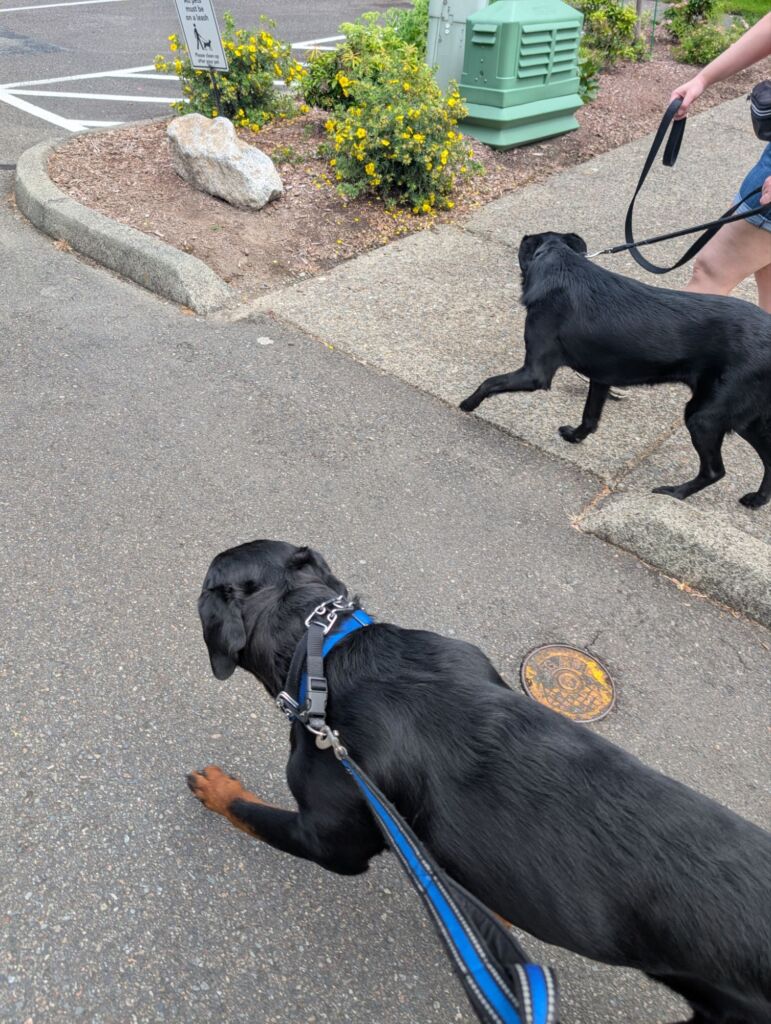
What Effective Dog Training Actually Looks Like
Effective training shouldn’t feel like constantly fighting your dog.
Over time, it should make everyday life easier.
Your dog begins understanding what behaviors lead to the things they want. You become better at recognizing what your dog is communicating. Expectations become predictable.
Instead of repeating yourself endlessly, you develop a shared language. Instead of avoiding every difficult situation, you gain strategies for working through them. And instead of wondering whether your dog is simply incapable of behaving differently, you start seeing what they’re capable of when the training finally makes sense.
That’s especially important when you’re dealing with more than basic obedience.
Leash reactivity, aggression, anxiety, unreliable recall, destructive behavior, impulse-control problems, and other challenging behaviors usually aren’t solved by simply trying harder.
They require identifying why the behavior is happening and building a training plan around the individual dog.
You Don’t Need More Determination. You May Need a Better Plan.
If you’ve been diligently working with your dog and aren’t getting the results you expected, don’t assume the solution is another six months of doing exactly the same thing.
Look at the three ingredients:
Clarity: Does my dog genuinely understand what I expect?
Consistency: Are the rules predictable enough for my dog to learn them?
Communication: Am I using training methods and tools that actually make sense to this particular dog?
Dedication becomes powerful when those pieces come together.
And if you’re not sure what’s missing, that’s exactly where professional training can help.
Black Magic Dog Training provides private dog training, behavior modification, puppy training, board-and-train programs, and other personalized training services for dog owners in Kent, Maple Valley, and surrounding South King County communities.
We don’t expect you to arrive with a perfectly trained dog.
That’s rather the point.
Bring us the dog you have. We’ll help you build the dog you want to live with.