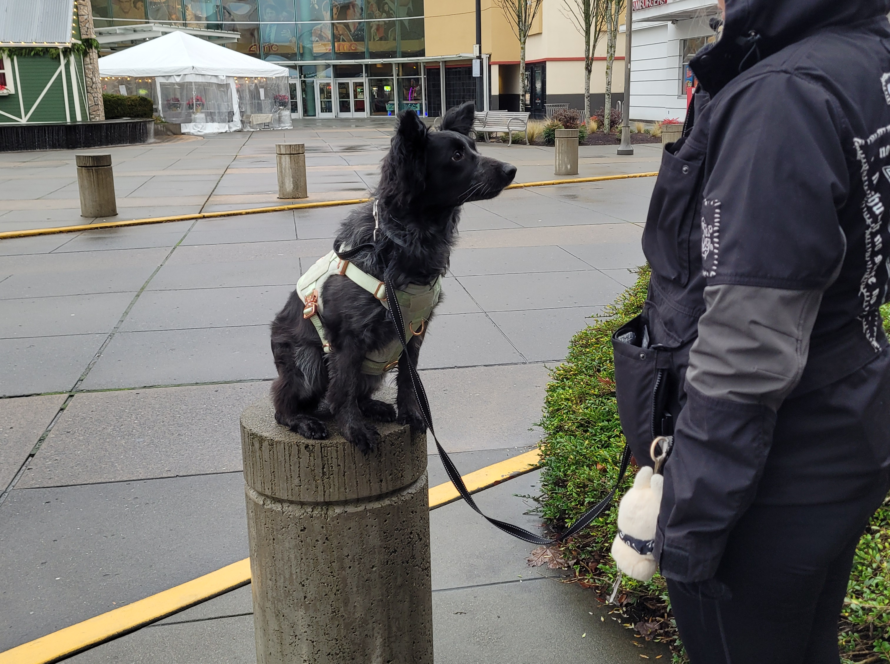
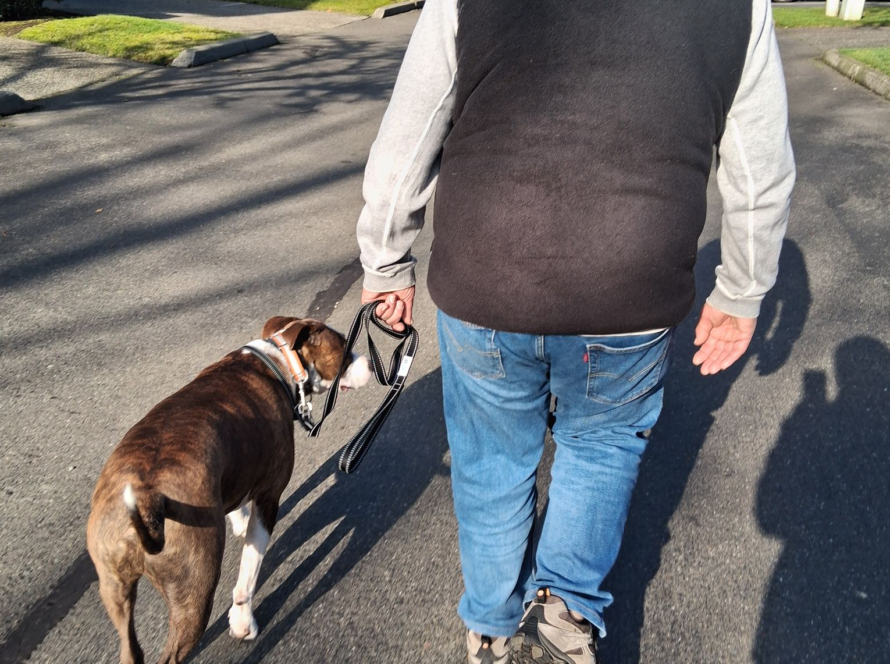
At Black Magic Dog Training, I specialize in balanced service dog training with a focus on low level pressure-based conditioning and reward, combining structure, positive reinforcement, and real-world proofing. I have worked in dog training for nearly a decade, and have seen disabled people shell out tens of thousands of dollars for training only to be dissatisfied with the results.
This has led me to establish my Self-Training Service Dog Program, in which I guide clients and their human helpers in selecting and self-training their own service dogs. Instead of doing a service dog board-and-train program, I believe in empowering the service dog handler so they understand how to maintain their critical tool and companion for life.
I believe in the self-trained service dog, because I have one myself.
Because of my belief in the self-trained service dog, I have assembled the basic guide on service dog training. In this guide, I will walk you through:
- Legal requirements for service dogs
- How to choose the right dog
- Essential obedience & public access skills
- Task-training fundamentals
- When self-training isn’t enough (and how I can help in these situations)
While self-training is possible, many handlers hit roadblocks requiring professional guidance. I will flag key moments where my private lessons or specialized service dog program can save you months of frustration and potentially save your training program entirely.
Legal Basics – What Makes a Dog a Service Animal?
Service Dog vs. Emotional Support Animal (ESA) vs. Therapy Dog
Service Dog (SD):
- Trained to perform specific tasks mitigating a disability (e.g., guiding the blind, alerting to seizures, medication reminders).
- Protected under the Americans with Disabilities Act (ADA). Service dogs legally must be allowed in public spaces with few exceptions.
- No certification required (but must be under control in public and meet the above criteria).
Emotional Support Animal (ESA):
- Provides comfort to a person (with or without a disability) just by providing companionship.
- No public access rights, but in some states do have housing and/or flight protections (with a doctor’s letter).
Therapy Dog:
- Visits hospitals/schools to cheer people up.
- No legal protections—requires facility permission.
If you need public access, your dog must be task-trained for your disability.
Choosing the Right Dog for Service Work
Many dogs across a wide variety of breeds can be trained to be service dogs. The appropriate dog for the job often depends on the wants and needs of the handler/owner and the types of tasks that need to be done. There is no set age, sex, or breed that a dog must be in order to qualify, but there are some key behavioral traits to look for across the board.
Ideal Service Dog Traits
- Calm temperament: reactivity or fearfulness disqualifies most dogs.
- Biddable (eager to please): herding/sporting breeds (Labs, Goldens, Poodles) tend to excel in this area.
- Healthy structure: hip/joint issues can end a career prematurely, and selecting a well-structured dog can protect the time, effort, and money invested into a service dog.
- Intelligence: while most dogs can learn tasks if given time and patience, a dog who knows how to learn and takes well to a wide range of training input will excel.
Can You Use Your Current Pet as a Service Dog?
At Black Magic Dog Training, I am often contacted to train a prospective client’s current pet as a service animal. While I have and continue to provide evaluations for this, it’s also important to note that it is generally a better idea to select a dog specifically for the work you need. That said, I have trained plenty of former pets to be wonderful workers.
It’s worth reaching out for an evaluation if you’d like to know if your pet can become a service dog, but it’s critical to be honest about these red flags:
- Reactivity (overly distracted by triggers or even barking/lungng at dogs/people)
- High uncontrolled prey drive (chasing squirrels or other critters obsessively)
- Separation anxiety (can’t focus without you)
The truth of the matter is, many pet dogs aren’t cut out for service work. If yours struggles with basics (loose-leash walking, ignoring distractions), my service dog evaluations can assess suitability. And, if need be, I can even guide my clients to a suitable match!
Foundational Obedience: The Non-Negotiables
There are some things a service dog must have in order to function properly in public and as a basis for many tasks. Some of these are common pet dog behaviors, such as a reliable sit, down, street heel, and recall. Others are more complicated, such as public access positions and task foundations.
Impeccable Leash Manners
Service dogs must have extremely reliable leash manners. This means:
- No pulling, even in crowds.
- Ignoring food on the ground.
- Lack of reactivity to dogs, cars, people, and other potentially stressful stimuli.
For my leash foundations, I prefer a prong collar or slip collar (and avoid harnesses that can encourage pulling).
Rock-Solid Stay (Even When You’re Far Away)
- Start on a mat (“place” command), then generalize.
- Critical for: Blocking in crowds, holding position during medical episodes.
Neutrality to EVERYTHING
- No reacting to dogs, kids, sirens, or dropped food.
- Must stay focused on working, even in the presence of difficult distractions
Stuck? Many owners hit a wall with neutrality. Contact me for a free consultation to discuss how I can help.
Task Training – Teaching Disability-Specific Skills
The thing that truly sets a service dog apart from an impeccably-trained pet is having specific task skills to help a human with a disability. Generally a service dog must know three separate tasks, but the tasks are up to the needs of the individual handler.
Disability Example Tasks
PTSD: Blocking (creating space), nightmare interruption, deep pressure therapy, emotional check-ins
Diabetes: Alerting to blood sugar highs/lows, fetching glucose monitor
Mobility: Retrieving items, opening doors, bracing for balance, pulling to help handler up from being seated
Autism: Deep pressure therapy (DPT), behavior interruption, tactile stimulation
Many of these tasks can be taught at home in a fairly straightforward manner. My own service dog, Grimm, learned many tasks by simple virtue of living with me and my own disabilities. You can get a head-start on self-training your service dog with my book, BLACK MAGIC SERVICE DOG TRAINING.
Self-Training a Service Dog?
Join my mailing list to be notified of the release of BLACK MAGIC SERVICE DOG TRAINING, my all-encompassing guide to training a service dog from home and building an amazing dog-handler bond.
Other tasks can be tedious or complicated to learn, both for the dog and the human. Some tasks I would recommend employing professional help for are:
- Alerting to medical episodes, which requires scent training expertise or an awareness of other discernable early “tells.”
- Bracing, which risks injury to the dog or handler if taught incorrectly.
- Item retrieval, which can be a complicated chain of behavior for many dogs.
Public Access Training
Public access is the ability for a service dog to accompany its handler anywhere and everywhere without a significant loss of focus and working ability. A service dog who can perform a plethora of tasks but fails to execute them in public is unfortunately useless as a medical helper. And a dog who can help their handler with a disability but who will go potty in stores or shows reactivity to other dogs or people is a nuisance or even a danger to the public.
Stores, restaurants, and public transit introduce:
- Overstimulation (smells, sounds, strangers).
- Unpredictable distractions (screaming kids, off-leash dogs).
How to Proof Your Dog
1. Start quiet. Pet-friendly stores such as hardware stores during off-hours.
2. Use a “focus” command. Reward eye contact amid chaos.
3. Simulate challenges. Drop a hot dog on the floor; correct if your dog tries to grab it.
The Breaking Point: If your dog…
- Freezes/shuts down in public
- Ignores commands when stressed
- Gets overly excited around people
…it’s time to consult a service dog trainer like myself at Black Magic Dog Training.
When to Hire a Professional
Self-training a service dog is possible, but it isn’t easy. It’s okay to start off self-training, and get help at a later time.
However, for a high-stakes project like training a service dog, it’s not a bad idea to start with a guide there to help from the beginning. My service dog program is more affordable, more reliable, and provides longer-lasting results than a board-and-train, and can help you train a service dog from the very first step to final certification.
If you’ve already started, here are some signs that finding some help might be a good idea for you.
Signs Self-Training Isn’t Working
- Your dog “knows” commands at home but fails in public.
- Task training isn’t reliable (e.g., misses medical alerts in certain places).
- Reactivity resurfaces under stress.
If any of these things are happening, it’s time for a little professional guidance. If you’re struggling:
1. Don’t be too hard on yourself! Service work often demands elite-level training.
2. Get help early. The longer bad habits persist, the harder they are to fix.
Need Expert Guidance? I train service dogs for PTSD, mobility issues, and medical alert work. Contact me for a free evaluation to see if your dog is on track—or needs professional support.