T
Many wonderful, loving family pets are NOT cut out for service work. The qualities that make a dog a delightful companion in the home are often different from those required for the immense responsibility of mitigating a disability in the chaotic real world. Mistaking a pet’s potential for service suitability can lead to years of frustration, financial loss, and, most tragically, a “washed” dog that carries the confusion of its failed training.
At Black Magic Dog Training, I specialize in the critical art of the service dog prospect evaluation. My role is to be a diviner of potential, to look past breed and affection and see the dog in front of me for what they are. This guide outlines the ten essential traits I assess. It is a sober, honest look at what it truly takes to succeed in this demanding role.
The Foundational Four
These four non-negotiable traits form the bedrock of service work. If a dog is deficient in any of these, their candidacy is, with near certainty, untenable.
Unshakable Nerve & Environmental Stability
A service dog cannot be easily startled by the world. They must process novel stimuli with curiosity or calm indifference, not fear.
What It Looks Like: The dog notices a shopping cart crashing, a child screaming, or a gate slamming shut. They may glance at the source but quickly return to their baseline state of mind. They do not panic, freeze, or become defensive.
Why It’s Non-Negotiable: A fearful dog is an unreliable dog. If a sudden noise causes your cardiac alert dog to bolt, it has failed its primary job. Their nervous system must be a placid lake, not a turbulent ocean. This trait is largely genetic and incredibly difficult to instill through training.
Profound Intelligence & Problem-Solving Ability
Service work is not about rote obedience; it’s about applying learned tasks in dynamic, unpredictable situations.
What It Looks Like: The dog can learn complex chains of behavior (e.g., retrieve a specific item from another room, open a door, and then brace for stability). When faced with a novel problem—like a door that is stuck—they can try alternate strategies rather than giving up.
Why It’s Non-Negotiable: A service dog must be a thinking partner. They will encounter scenarios you never specifically trained for, and they need the cognitive flexibility to problem-solve within the framework of their training.
A Strong, “Switchable” Drive
Drive is the engine of performance. A successful candidate needs a healthy balance of two key drives:
Prey Drive: The desire to chase and possess. This is channeled into retrieving items, tugging open doors, and building engagement with toys as rewards. Prey drive in a service dog should be enough to motivate and train the dog, but not so much that it overrides training in the real-world presence of a squirrel or bunny.
Pack Drive: The desire to work with and be near the handler. This fuels the desire to please and connect.
Why It’s Non-Negotiable: A dog with no drive is lazy and unmotivated. A dog with uncontrollable drive is frantic and distracted. The ideal candidate has high drive that can be “turned on” for work and, critically, “turned off” for hours of quiet settling.
Innate Biddability (A “Yes!” Mindset)
Biddability is the dog’s inherent desire to follow human guidance and comply with requests.It is the opposite of independence.
What It Looks Like: When you ask for a behavior, the dog tries to offer it. When you give a new cue, they are eager to figure out what you want. They look to you for direction.
Why It’s Non-Negotiable: An independent dog that questions every command is exhausting to train and unreliable in a crisis. Service work is a partnership where the human is the leader; the dog must be a willing follower.
The Four Pillars of Partnership – The Handler-Facing Traits
These traits determine how the dog will function specifically in relation to you and your disability.
Calm, Low Arousal Demeanor
Service dogs spend 90% of their job doing nothing—waiting, watching, and settling. They must be inherently “low-key.”
What It Looks Like: The dog is content to lie quietly at your feet for extended periods without becoming restless, fidgety, or demanding attention.
Why It’s Non-Negotiable: A high-arousal dog would be a constant source of stress, not a source of calm. Their default state must be peaceful to be a therapeutic presence.
Neutrality to People, Dogs, and Other Animals
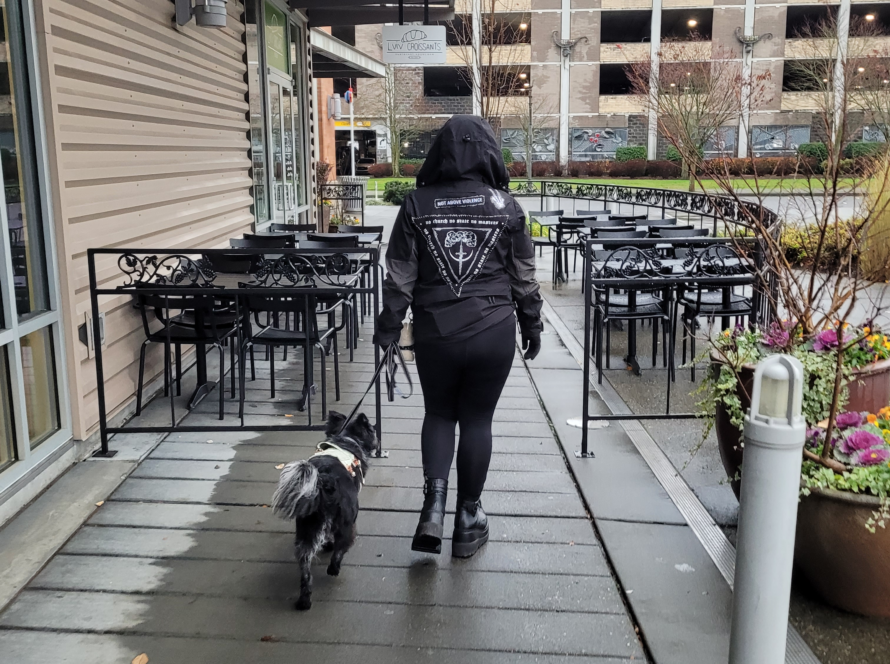
The world is full of distractions. A service dog must find you more interesting than anything else.
What It Looks Like: Another dog barks; your may glance at the dog but ultimately remains focused on you. A stranger offers a treat; your dog ignores it. A child runs past; your dog doesn’t give chase.
Why It’s Non-Negotiable: A dog that is reactive to other dogs or solicits attention from strangers cannot maintain the focus required for its tasks. It becomes a liability in public.
Sound Physical Health and Structure
A service dog does not need to be an explosive canine athlete, but the body must be able to withstand the job.
What It Looks Like: No signs of structural issues like hip or elbow dysplasia. A size appropriate for its intended tasks (e.g., a Papillon cannot provide mobility support). Good overall stamina.
Why It’s Non-Negotiable: Service work is a career. A dog that breaks down physically at age three has failed its handler. A veterinary exam and often OFA/PennHIP x-rays (for adult dogs) are a very worthwhile part of prospect evaluation.
You can learn more about service dog fitness in my article, Creating a Service Dog Fitness Regimen for Peak Performance and Longevity
Resilience and Bounce-Back
How a dog handles being wrong is as important as how it handles being right.
What It Looks Like: You provide a fair correction to the dog for an error, such as stepping out of heel after being distracted by another dog. They take the feedback and shake it off (a literal “stress shake”) and immediately resume work or try again with a positive attitude. They do not sulk, shut down, or become avoidant.
Why It’s Non-Negotiable: Training is filled with failures and corrections. A soft dog that cannot handle mild pressure will break. A resilient dog sees a fair correction as information and moves on.
The Two X-Factors – The Traits That Seal the Deal
These final traits are the glue that binds everything together, creating a truly exceptional service dog.
A Strong Marker of Connection (The “Check-In”)
This goes beyond simple focus.It is a conscious, habitual seeking of connection.
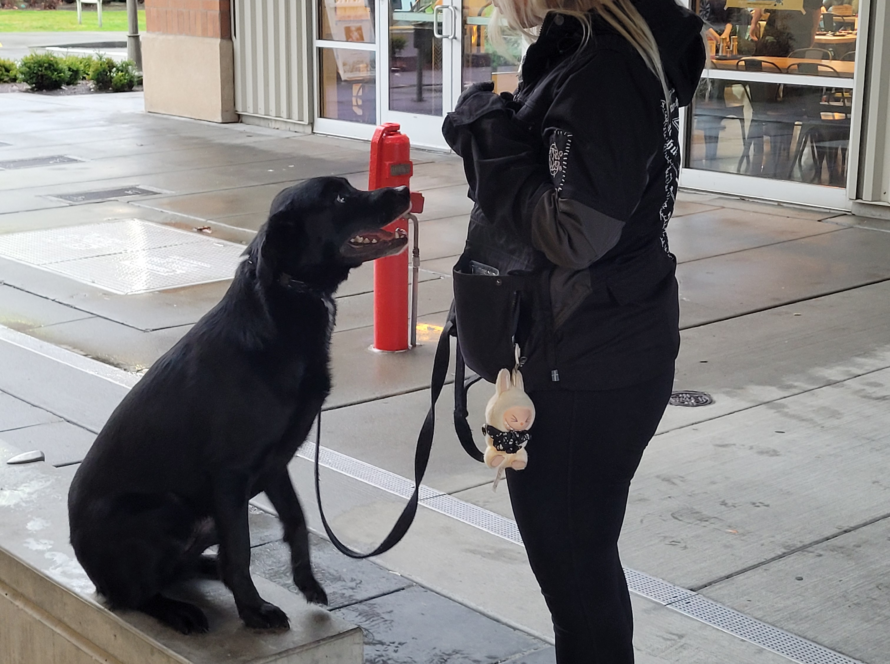
What It Looks Like: In a new environment, the dog voluntarily looks up at you, as if to say, “I’m here, what’s next?” This isn’t a trained behavior; it’s a default offering of engagement.
Why It’s Non-Negotiable: This intrinsic connection is the heart of the partnership. It ensures the dog is mentally “checked in” and ready to receive information, making all other training exponentially easier.
Adaptability and Generalization
The ability to perform a learned task anywhere, under any conditions. During training, we help our service dogs in training practice their skills in different environments, but the dog at base level must present potential for doing learned skills in any place it may go with its handler.
What It Looks Like: The dog that retrieves a phone perfectly in your living room can also do it in a busy airport, on grass, or in a dark room. They understand the concept of the retrieve, not just the context of your home.
Why It’s Non-Negotiable: A service dog’s work is not confined to one location. If a skill doesn’t generalize, it is useless. This ties directly back to their intelligence and problem-solving ability.
Common Misconceptions About Service Dog Prospects
“My dog is so loving and sweet-tempered!” Affection is wonderful, but it is NOT a predictor of service suitability. The dog must be able to ignore that affectionate instinct to do its job.
“He’s so smart, he knows exactly what I’m thinking!” Intelligence without biddability creates a clever but stubborn partner who may use their intelligence to circumvent your commands.
“She’s a [Specific Breed], and I heard they make great service dogs.” Breed can indicate a higher probability of certain traits, and I often to recommend a “Fab Four” to people considering a service dog, but it is never a guarantee. We must evaluate the individual dog in front of us, not the breed standard.
Evaluating a service dog candidate requires brutal honesty. It demands that you set aside your emotional attachment and assess the dog with a clinical eye. The ten traits outlined here are a stringent checklist. A deficiency in even one can be enough to compromise the entire endeavor.
The cost—financial, emotional, and temporal—of training a service dog is immense. The cost of a dog that fails out of training halfway through is even higher. The most compassionate first step you can take is a professional, unbiased evaluation. It is the first, and most important, investment in a partnership that has the power to transform a life.
Seek a Professional Before You Invest
If you are considering the service dog path for yourself or a loved one, do not rely on guesswork or hope. The stakes and the investment are too high.
At Black Magic Dog Training, I offer a service that is both a science and an art.
The Service Dog Prospect Evaluation: This is my comprehensive assessment. I put your dog through a series of structured tests and observations to evaluate each of the ten essential traits. You will receive a detailed, honest report on your dog’s suitability and potential, including a clear “Recommend,” “Not Recommended,” or “Recommend with Reservations” verdict.
Foundational Service Dog Training: For confirmed prospects, I build the critical groundwork of public access skills, task training, and the profound handler-dog bond required for success. I offer service dog training in western Washington state in both daycare training and private lesson format, depending on the needs of the handler and dog.
Guidance on Sourcing: If you do not yet have a dog, we can provide guidance on how to identify ethical breeders or select a rescue dog with service potential.
Do not begin this monumental journey based on a feeling. Base it on data. Contact Black Magic Dog Training today to schedule your Service Dog Prospect Evaluation and learn the truth of your dog’s potential.