Congratulations,
For many, the CGC is the final destination. But for those who see it as the beginning—for handlers who use their dogs as true partners in an active, urban lifestyle—the journey is just getting started. The AKC offers two advanced pathways that build directly upon the CGC foundation: the Community Canine (CGCA) and the Urban CGC (CGCU) titles.
As an AKC-certified CGC Evaluator serving the Greater Seattle-Tacoma area, I’ve guided countless teams through this rewarding progression. These titles are not just the next ribbon; they are a practical certification that your dog is more than just well-behaved in a quiet room—they are a reliable, resilient, and polished partner in the complex, unpredictable tapestry of modern life. This guide will be your roadmap to understanding, preparing for, and conquering these advanced evaluations.
Why the CGC is Just the Beginning
The standard CGC is a phenomenal benchmark. It proves your dog can handle basic obedience and manners in a relatively neutral, controlled setting like a training hall. The test items are the essential building blocks of a well-trained pet.
However, the real world is not a sterile training hall. The real world has skateboards, crowded sidewalks, dropped food, and loud traffic. The CGCA and CGCU titles are designed to bridge this gap between “trained in a vacuum” and “reliable in reality.” They are the difference between a dog that knows the commands and a dog that lives them, even under pressure.
Pursuing these titles offers profound benefits:
Real-World Reliability: The skills you master for these tests translate directly to less stressful vet visits, calmer café patios, and safer walks through your neighborhood.
A Deeper Bond: Navigating these more complex challenges together forges a communication and trust between you and your dog that simple obedience cannot match.
A Path to Therapy Work: For many, the CGCA is a required or highly recommended step toward therapy dog certification, as it demonstrates stability in public settings.
The Ultimate Preparation: If you ever consider sports like Rally or Obedience, or even a Service Dog role, the focus and precision required for the CGCU are an unparalleled foundation.
The AKC Community Canine (CGCA)
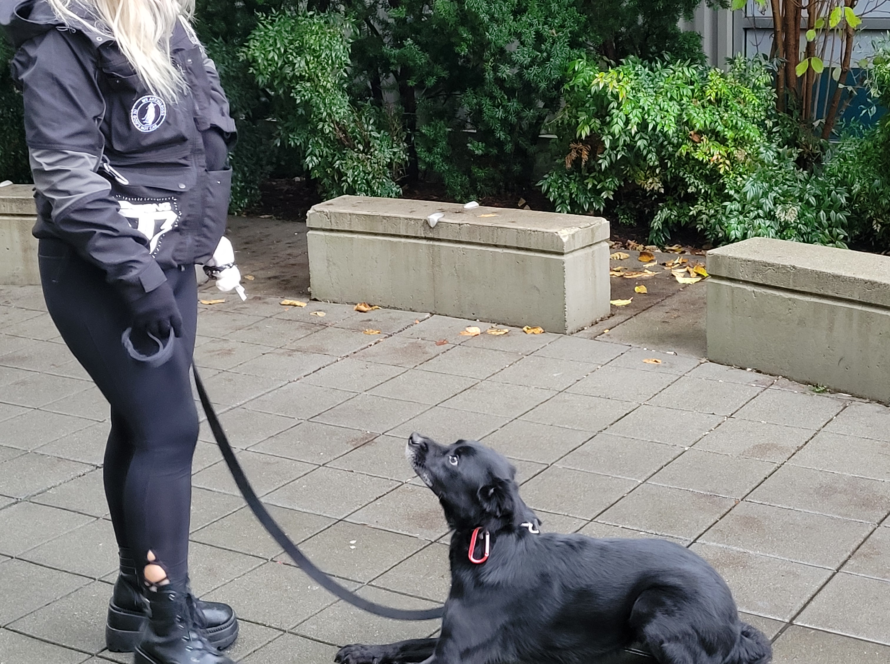
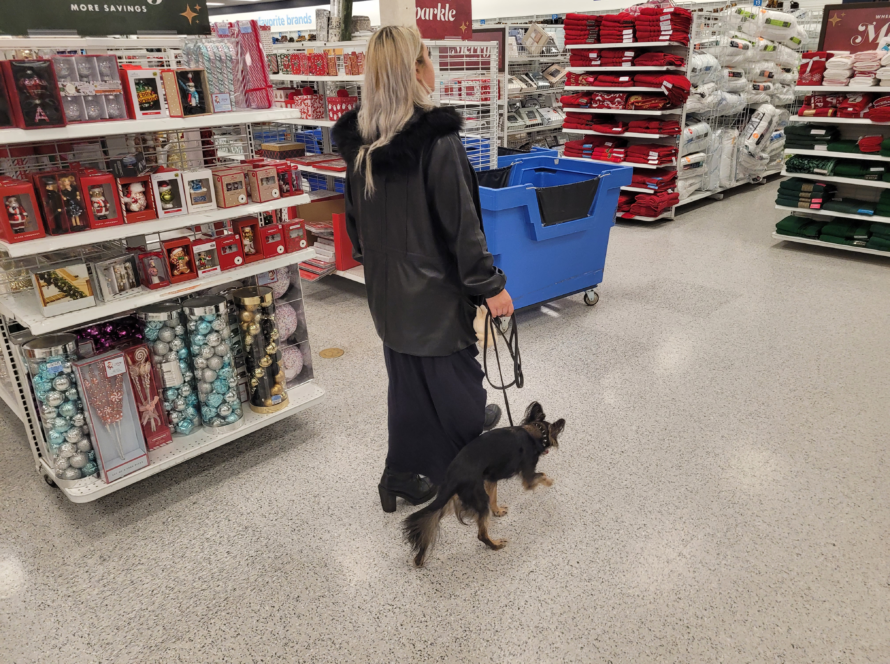
Think of the CGCA as the CGC’s older, more worldly sibling. While the CGC is tested in a class-like setting, the CGCA must be tested in a real-world location, such as a park, shopping center courtyard, or the grounds of a pet-friendly store.
The 10 Test Items for the Community Canine Title:
1. Sitting Politely for Petting: The evaluator pets your dog; your dog must remain calm and seated.
2. Appearance and Grooming: The evaluator brushes your dog and checks its ears and feet.
3. Walk on a Loose Leash: This is more challenging than the CGC, as it’s done in a distracting, outdoor environment with turns and stops.
4. Walk Through a Crowd: You and your dog navigate through at least three people. Your dog may show interest but should not be jumping, straining, or hiding.
5. Sit and Down on Command / Stay in Place: You choose the “sit” or “down” and ask your dog to stay while you walk 20 feet away, just like the CGC, but amidst the distractions of the location.
6. Recall (Come When Called): You leave your dog with another person, walk 10 feet away, and call your dog. The dog must come directly to you. This tests trust and focus in a high-distraction setting.
7. Reaction to Another Dog: You and another handler with a dog approach from 10 feet, stop, shake hands, and exchange pleasantries, then continue on. The dogs should ignore each other.
8. Reaction to a Distraction: The evaluator presents two distractions (e.g., dropping a crutch or chair, rolling a crate dolly past, having a jogger run by). The dog may startle but should not panic, bark, or show aggression.
9. Leave It: A piece of food or a treat is placed on the ground. As you walk past, your dog should ignore it.
10. Supervised Separation: You leave your dog with the evaluator, tied by the leash, and walk out of sight for 3 minutes. Your dog does not have to stay in a position but should not bark, whine, or pull excessively.
The Black Magic Training Focus for CGCA:
The key to the CGCA is something called “proofing,” or testing a skill in a wide range of environments. You must practice all the CGC skills, but you must do so in progressively more challenging environments. We call this the “Three D’s”: Distance, Duration, and Distraction. For the CGCA, we systematically increase the Distraction level.
For example, you can:
- Start in your quiet backyard.
- Move to an empty park.
- Practice at a slightly busier park.
- Finally, train in the parking lot of a quiet store.
The goal is to make obedience your dog’s default behavior, no matter what’s happening around them.
The AKC Urban CGC (CGCU)
The Urban CGC is the ultimate test of metropolitan manners. It is designed for dogs who live an urban lifestyle and must navigate the unique challenges of a city environment. The test is held in a real urban setting, and you will need a 20-foot leash for some exercises.
The 10 Test Items for the Urban CGC Title:
1. Entering/Exiting a Doorway or Passageway: The dog waits to be invited through a doorway and doesn’t pull you through.
2. Walk on a Loose Leash Through a Crowd: This is a more intense version of the CGCA test, simulating a busy sidewalk.
3. Walk on a Loose Leash Past Food and Distractions: Food is deliberately placed on the ground. The dog must ignore it.
4. “Leave It”: The evaluator offers your dog a treat; your dog must refuse it.
5. Recall (Come When Called) with Distraction: This is done on a 20-foot leash in the urban environment, a serious test of focus.
6. Sit and Down on Command / Stay in Place: Similar to previous tests, but performed in the heart of the urban setting.
7. Settle: You sit down, perhaps on a park bench or the steps of a building, and drop your dog’s leash. Your dog must “settle” calmly beside you for 30 seconds. This is the ultimate café/patio readiness test.
8. Reaction to a Passing Dog, Person, or Distraction: The dog must remain calm as another dog, a person with a stroller, or a similar distraction passes within 5 feet.
9. Reaction to a City Noise: The evaluator creates a sudden, loud city noise (e.g., clanging a metal bowl, shaking a can of rocks). The dog should not panic.
10. Crossing a Street: You and your dog approach a street (real or simulated). You must ask for a “sit” at the curb, then cross in a controlled manner.
The Black Magic Training Focus for CGCU:
The key here is desensitization and precision. We must systematically expose your dog to the specific sensory overload of the city in a positive, controlled way.
Surface Training: Practice “sit” and “down” on grates, metal plates, uneven pavement, and wet surfaces.
Sound Desensitization: Create a “city sounds” playlist (sirens, jackhammers, bus brakes) and play it at a low volume during training, gradually increasing the volume as your dog remains calm.
The “Settle” Command: This is a dedicated skill. We build it from the ground up, starting with a single second of calmness in a boring room and gradually adding time and distraction.
Street Smarts: We practice curb sits at every opportunity, making it an automatic behavior. We teach the dog to use your body as a shield from traffic and crowds.
A Strategic Training Plan for Success
Passing these tests requires more than just knowing the items; it requires a strategic training plan.
Foundation Fortification (2-4 Weeks)
Re-test all CGC items in your home and yard. Ensure they are flawless with zero lapses.
Introduce the “Settle” command in a low-distraction environment.
Begin practicing “Leave It” with high-value food on the ground.
The Proofing Pilgrimage (4-6 Weeks)
Take your show on the road. For CGCA, visit different parks and pet-friendly storefronts.
For CGCU, start at the quiet edges of an urban center (e.g., a library plaza on a Sunday morning) and gradually work toward busier areas and times.
Focus on one or two skills per outing to avoid overwhelming your dog.
The Mock Evaluation (1-2 Weeks Before the Test)
Enlist a friend to act as the “evaluator” and run through the entire test sequence in a location similar to the test site. This builds confidence and reveals any final weaknesses in your training.
As an AKC Evaluator, I offer mock test sessions for my clients to simulate the pressure and format of the real test, ensuring there are no surprises on test day.
Why an Evaluator’s Guidance is Invaluable
While you can train for these titles on your own, the guidance of a certified AKC CGC Evaluator like myself can be the difference between passing and failing, and more importantly, between a stressed dog and a confident one.
An evaluator doesn’t just administer the test; we understand its nuances. We can:
Spot Subtle Errors: We see the tiny leash tension or the delayed sit that could cost you a pass.
Provide Context-Specific Drills: We know the most common failure points for the Urban test in the Seattle-Tacoma area and can design drills to address them.
Offer Objective Feedback: It’s easy to miss your own handling errors. We provide a neutral, expert eye to correct your timing and energy.
Ensure a Positive Experience: Our goal is to set you up for success. We create a fair but supportive testing environment that allows your dog to showcase their best self.
From Good Citizen to Community Partner
The journey from CGC to CGCA and CGCU is a transformative one. It moves your relationship with your dog from manager-employee to true navigating partners. You will learn to read your dog’s subtle cues in stressful environments, and your dog will learn to look to you for guidance no matter what the city throws at you.
These titles represent a shared accomplishment that speaks volumes about your dedication and your dog’s incredible temperament. They are a public declaration that your dog is not just a well-mannered pet, but a trusted, integrated, and welcome member of the community.
Ready to Take the Next Step? Let’s Navigate It Together.
As an AKC Certified CGC Evaluator based in the Greater Seattle-Tacoma area, I am uniquely positioned to guide you and your dog to success. I don’t just test; I teach.
Advanced Title Prep Packages: My specialized training packages are designed specifically for the CGCA and CGCU. We will train in the actual environments where you will be tested, building confidence and reliability through realistic practice.
Official AKC Evaluations: I am authorized to administer all three tests—CGC, Community Canine, and Urban CGC. Schedule your official test with a trainer you know and trust.
The “Triple Crown” Challenge: Ask me about our program for dedicated teams aiming to achieve all three titles, the ultimate badge of honor in canine citizenship.
Don’t let your training journey end with the CGC. Unleash your dog’s full potential as a community partner. Contact Black Magic Dog Training today to schedule your advanced training consultation or official evaluation.