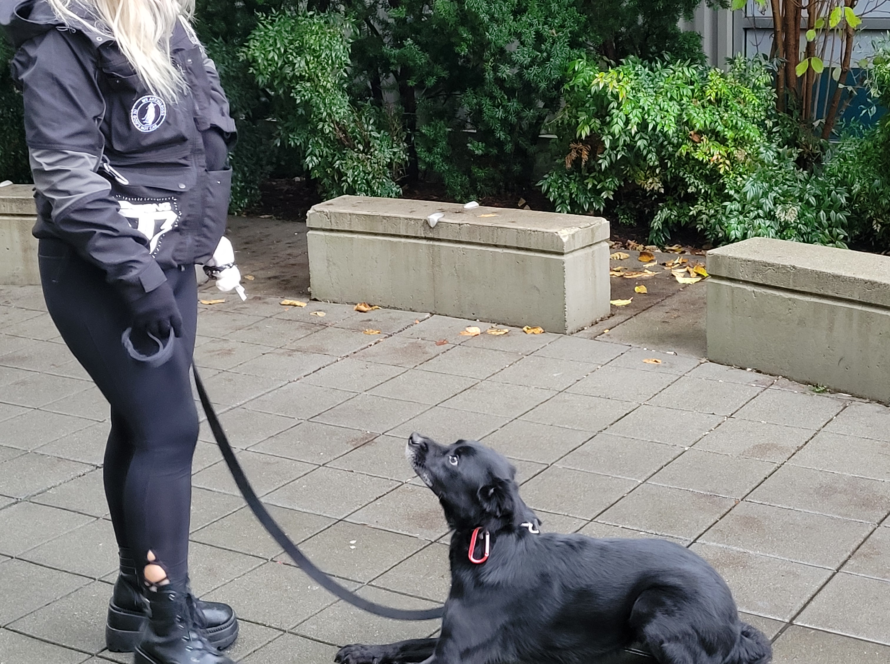
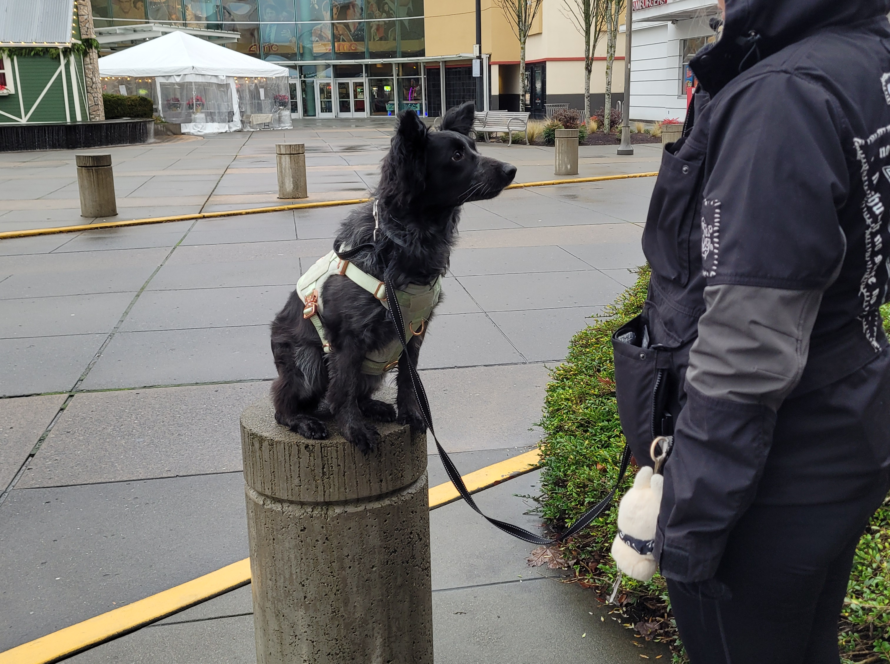
Theworld of dog sports—Agility, Rally Obedience, Nosework, Barn Hunt—can seem like an exclusive club for purebred dogs and professional handlers. For pet dog owners just starting to test the water in a more advanced space, the complex rules and intensive training can seem kind of hardcore and, frankly, intimidating. The truth is, a successful sport dog is not born, but built. And the most resilient, joyful competitors are often the ones who started their journey as a beloved family pet.
At Black Magic Dog Training, I specialize in the process of transforming the deep bond of a family pet into the focused drive of a sport partner. This is not about creating a different dog; it’s about unveiling the dog that was always there. This guide is your map for the journey from the comfort of your home to the excitement of the ring, building a legacy of partnership one step at a time.
The Prospect in Pajamas – Evaluating Your Pet’s Potential
The first step is to look at your dog with a new eye—not as a pet, but as a potential athlete. Forget breed stereotypes. As the owner of two sport Xoloitzcuintli, I can tell you that the heart of a competitor can beat in any chest.
The Core Traits of a Sport Prospect:
Desire to Work: Does your dog offer behaviors? Do they bring you the ball again and again? Do they get excited when you grab a specific toy or your training pouch? This intrinsic motivation is your most valuable asset.
Resilience: How does your dog handle frustration? If a treat rolls under the couch, do they give up or try to get it? A dog that can bounce back from a minor failure will thrive in the trial-and-error process of sport training.
Focus (or the Potential for It): You don’t need a laser-focused dog on day one. You need a dog that can, even for a few seconds, lock onto you amidst distraction. This is a skill we can build, but the raw material must be there.
When I started doing sport-focused training with Kola, my first Xolo, he was fresh and rough around the edges. Getting focus and engagement from him was a battle all on its own, but it paid off. In a low-drive dog I managed to build prey drive, confidence, and a genuine love for the work.
You can, too.
Physical Soundness & Structure: This is non-negotiable. Before embarking on any sport, a full veterinary check-up is essential. We must work with the body your dog has, not the one we wish they had. A low-slung Corgi may not be an agility champion, but they could be a Rally Obedience superstar.
The Dog-Handler Bond: Your greatest advantage over a professional handler is your pre-existing relationship. Hopefully, your dog already trusts you. They already look to you for comfort and security. This is the fertile ground in which we will plant the seeds of a successful sport dog.
Building the Athletic Mindset
You cannot build a cathedral on sand. Before we teach jumps or scents, we must build an unshakable foundation. This phase is about forging the tools we will use for the rest of the journey.
“Yes!” – The Language of Success
We must establish a crystal-clear “yes” marker. This isn’t just for treats; it’s the sound of a correct choice, the click of a camera capturing a moment of brilliance. This becomes our primary way of communicating “Super! Do that again!”
To learn more about marker training for sport dogs and pets alike, check out my article The Psychology of Reinforcement: A Deeper Look at Marker Training
The Power of the Premack Principle (Grandma’s Law):
This is the most powerful tool for a pet-turned-sport dog. The principle goes like this: First do what I want, then you get to do what you want.
In practice, “Touch my hand” turns into “Yes!” turns into “Okay, go get the treat I dropped on the floor.”
You are teaching your dog that cooperation with you is the key that unlocks all the good things in the world. This builds immense engagement and a “can-do” attitude.
Building Engagement:
Sport is a conversation, not a monologue. We teach the dog that we are the most interesting thing in any environment.
The Name Game: Say your dog’s name. The moment they make eye contact, Yes! and reward. Build this until their head whips toward you the instant they hear their name, no matter the distraction.
The Hand Touch: Teaching your dog to reliably “touch” your hand with their nose is a foundational targeting skill with endless applications in every sport.
Core Obedience with a Sporty Flair:
Sit,down, and stay are no longer just about manners; they are about precision, speed, and enthusiasm. We don’t want a slow, reluctant “down.” We want a lightning-fast “drop” that the dog is eager to perform.
Choosing a Sport for the Pet Dog
Not every sport is for every dog. The key is to find the one that aligns with your dog’s natural instincts as well as your own interests. After all, if either of you are less than enthusiastic about showing up for training, chances are you simply won’t show up at all.
Rally Obedience (Rally-O): The perfect starting point. It’s a fun, upbeat version of traditional obedience where you and your dog navigate a course of signs telling you what to do. It emphasizes teamwork and is incredibly forgiving. Rally obedience is ideal for any dog with basic obedience and a patient handler, but it is particularly good for thoughtful, handler-focused dogs.
Nosework (Scent Work): This sport taps into your dog’s most powerful sense. The dog learns to search for a specific odor (like birch or anise) and alert you to its location. Almost any dog can do nosework, as it is an extremely easy, beginner-friendly sport. That said, nosework is especially appealing for shy, reactive, or independent dogs. It builds incredible confidence and gives them a “job” that uses their natural abilities.
Barn Hunt: This sport channels the prey drive of terriers and other ratters, but any dog can play. The dog climbs on and under bales of hay to find a tube containing a live (but safely protected) rat. Depending on the level your dog is working at, there will be decoy tubes that may be empty or contain clean rat litter. The dog can perform any behavior, trained or not, to indicate a live rat is found, but the handler must be able to read their dog and call live rats out correctly to earn points. Most dogs find rat hunting enjoyable, but Barn Hunt is especially suited for tenacious, prey-driven dogs who love to climb and dig.
Agility: The crowd-pleaser. The dog navigates a timed obstacle course including jumps, tunnels, weave poles, and the A-frame. This is ideal for high-energy, athletic, and confident dogs with a strong toy or food drive. It requires a significant physical foundation to prevent injury, and the handler must have decent cardiorespiratory health to keep up with their bounding dog.
Trick Dog: Don’t underestimate this as a “sport.” Earning AKC Trick Dog titles is a fantastic way to build a vast vocabulary of behaviors, improve communication, and boost your dog’s confidence in a low-pressure, at-home setting. It is the ultimate foundation for all other sports. Teach your dog a set of tricks, from home, in-person with a trainer, or with an online course. Send your video in to a AKC Trick Dog evaluator like myself, and earn a title to go with your dog’s name!
Training – Mindset Over Mechanics
The training process itself is where the legacy is forged. Your mindset as a handler is everything.
Embrace the “Fringe Sport Dog”: As the owner of working/sport Xolotizcuintli (perhaps the off breed to end all off breeds…) take it from me that your goal is not to beat the professional Malinois handlers on the national stage. Your goal is to Q (qualify) with your best friend by your side. Celebrate the small victories—the first successful contact on the dog walk, the first independent scent find, the first happy, fast fancy-footed heel.
Train the Dog in Front of You: Your Labrador is not a Border Collie. Your rescue mix is not a Golden Retriever. Celebrate their unique strengths based on what they show you, not on what you hope for. A slow, methodical dog might be a Nosework genius. A fast, chaotic dog might need more foundational work but will bring incredible energy to Agility.
Make Every Session a Party: Keep training sessions short (3-5 minutes) and always end on a success. If you or your dog get frustrated, stop. The goal is to build a history of winning. The sport must always be fun. If it stops being fun, you’re doing it wrong.
Learn more about the five-minute training session in my article, Train Your Dog in 5 Minutes a Day: The Power of Micro-Sessions in Dog Training
Manage Your Ego: You will make handling mistakes. Those of us who have been at it for years will, and so will you. Your dog will have off days. The judge will give you a dreaded “NQ” (Did Not Qualify). This is not failure; it’s data. It tells you what to work on next. The legacy is built on how you handle these setbacks together.
Treat the Ring Like It’s Just Another Room
The final step of the journey is walking into the competition venue. It’s loud, crowded, and smells strange. But if you have built your foundation correctly, it’s just another room to your dog—a room where they get to play their favorite game with their favorite person.
When you step to the start line, the legacy is already complete. The titles and ribbons are merely souvenirs. The true legacy is the unspoken language you now share. It’s the glance that says “I’m ready,” the subtle body shift that directs your dog, and the profound trust that allows them to work with joy and confidence far from home.
The journey from family pet to sport partner is the most rewarding path you can walk with your dog. But having a guide can help you avoid pitfalls, train with precision, and build confidence faster.
At Black Magic Dog Training, I live for this transformation.
The Sport Prospect Evaluation: In a free evaluation, I’ll assess your dog’s natural drives and temperament and recommend the perfect sport to match your team’s unique strengths.
Foundations for Sport Program: My specialized curriculum builds the engagement, focus, and physical skills needed to excel in any canine sport.
Sport-Specific Coaching: I offer introductory guidance and training for Rally, Nosework, and foundational Agility, as well as full courses on AKC Trick Dog and AKC Fit Dog, all for preparing you for your first steps into the ring.
Your dog has a legacy waiting to be built. Don’t let it remain a dream. Contact Black Magic Dog Training today, and let’s start your journey from the living room to the winner’s circle.