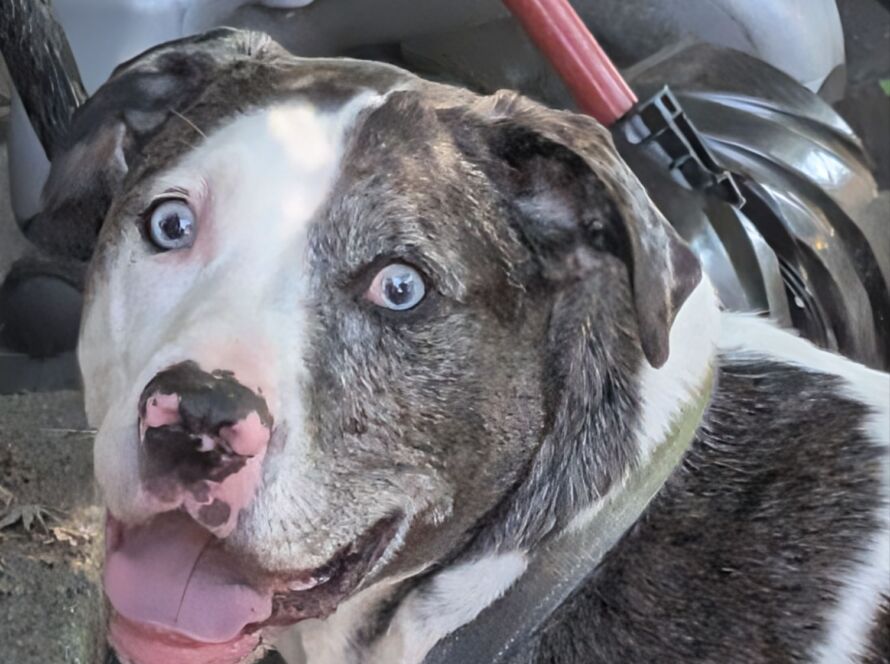
QProin The American Kennel Club’s Canine Good Citizen (CGC) test is more than just a certificate; it’s a testament to a strong, respectful partnership between you and your dog. It’s a promise to your community that your dog is reliable, polite, and a joy to have around. As an AKC CGC evaluator based in Kent, WA, I’ve seen the look of immense pride on a handler’s face when their dog passes. I’ve also seen the subtle tells that indicate a team isn’t quite ready.
Preparing for the CGC isn’t about drilling commands until a dog is robotic. It’s about cultivating a foundation of trust, impulse control, and clear communication that can hold up under the gentle pressure of a novel environment.
At Black Magic Dog Training, we view the CGC as a cornerstone of responsible dog ownership. It’s the perfect launchpad for therapy work, dog sports, or simply a more harmonious life together. So, let me pull back the curtain and give you an insider’s perspective on how I, as a trainer and evaluator, prepare a dog for this esteemed test.
The Philosophy: It’s a Conversation, Not a Monologue
Before we even look at the test items, we must establish the right mindset. The CGC is a test of your dog’s training, not just their innate temperament. My goal is to help you build a dog who chooses to listen to you, even when distractions are present. This is achieved not through dominance, but through fostering a relationship where your dog finds you more interesting than the world around them.
We use the same foundational principles that underpin all our work, from AKC STAR Puppy to complex behavior modification: patience, consistency, and positive reinforcement.
—
Decoding the 10 Test Items: A Trainer’s Breakdown
Here’s a look at each of the 10 test items, not just from a tester’s perspective, but from a trainer’s, with insights into the common pitfalls and how to overcome them.
1. Accepting a Friendly Stranger
· The Test: You and your dog are approached by a neutral stranger who ignores the dog and speaks only to you.
· The Inside Look: This is the first test for a reason. It assesses your dog’s ability to remain calm in a basic social situation. The biggest hurdle here is often an overly friendly dog who wants to jump up and greet. We work on a default “sit” or “stand” as a polite greeting posture. The key is teaching your dog that calmness, not excitement, is what gets rewarded.
2. Sitting Politely for Petting
· The Test: The stranger from the first item will now ask to pet your dog, and your dog must remain calm and accepting.
· The Inside Look: This tests your dog’s comfort with being handled by unfamiliar people. For shy or reserved dogs, this requires careful desensitization. We practice with a variety of people (different ages, genders, wearing hats) to build confidence. The handler’s calm energy is contagious here; if you’re nervous, your dog will be too.
3. Appearance and Grooming
· The Test: The evaluator will lightly groom your dog with a brush and perform a simple physical inspection (checking ears, lifting front feet).
· The Inside Look: This is directly related to husbandry and vet visits. Many dogs fail here because they are touch-sensitive. We integrate cooperative care techniques into daily life, making handling a positive, rewarding experience. We teach a “chin rest” or “target” behavior to give the dog a job to do during the inspection, transforming a passive exam into an active, rewarding game.
4. Out for a Walk (Walking on a Loose Leash)
· The Test: You’ll walk a course with left and right turns, and one stop. The leash must remain loose throughout.
· The Inside Look: This is often the most challenging item for many teams. It’s not a formal heel; the dog can be in front or beside you, but without pulling. We focus heavily on reinforcement-based loose leash walking, often using the “circle method” or “pattern games” to teach the dog that staying near you is highly rewarding. We practice in increasingly distracting environments, starting in the living room and progressing to parks like Fort Steilacoom.
5. Walking Through a Crowd
· The Test: You and your dog walk through a small “crowd” of at least three people. Your dog may show interest but should not be overly exuberant or fearful.
· The Inside Look: This tests the generalization of your loose leash walking skills under social pressure. We practice this by finding mildly busy areas—the parking lot of a Petco in Federal Way, the trailhead at Clark Lake Park—and simply walking back and forth at a distance that allows for success, gradually closing the gap.
6. Sit and Down on Command / Staying in Place
· The Test: You’ll ask your dog to sit and then down. Then, you’ll tell your dog to “stay,” walk to the end of a 20-foot line, and return.
· The Inside Look: This is a test of impulse control and reliability. The “stay” is the true challenge. We build this behavior slowly, using the three D’s: Duration, Distance, and Distraction, but we only ever add one at a time. We teach a solid “stay” release word to prevent the dog from breaking prematurely. This skill is non-negotiable for safety and is a core component of our behavior modification work.
7. Coming When Called (Recall)
· The Test: You’ll leave your dog in a “stay,” walk to the end of the 20-foot line, turn to face your dog, and call them to you.
· The Inside Look: A reliable recall is a lifesaver. For the CGC, the primary challenge is the dog breaking the stay early or coming in slowly. We make coming to you the most exciting thing in the world. We use high-value rewards (like real meat or cheese) reserved exclusively for recalls and practice in low-distraction environments first. We never punish a slow recall; we simply make the reward more valuable next time.
8. Reaction to Another Dog
· The Test: You and your dog will approach another handler-and-dog team, stop, shake hands, and exchange pleasantries. The dogs should show no more than casual interest.
· The Inside Look: This is a huge test of your dog’s focus on you. The goal is not for the dogs to ignore each other completely, but to remain polite and neutral. We practice “parallel walking” with known, stable dogs at a distance, gradually decreasing the space between teams. We teach a “watch me” or “let’s go” cue to disengage and move away, making you the priority.
9. Reaction to Distraction
· The Test: The evaluator will present two distracting scenarios, such as dropping a crutch or a chair, or rolling a dolly past the dog. The dog may appear startled but should not panic, show aggression, or bark excessively.
· The Inside Look: This assesses your dog’s resilience and trust in you. We prepare for this by building a positive association with strange sounds and sights. We might drop a book bag at a distance and toss a treat, or play sounds of clattering pans at a low volume during meal times. The goal is to create a “What was that? Oh, good things happen!” response instead of fear.
10. Supervised Separation
· The Test: You’ll leave your dog with the evaluator, tied to a post or held on leash, and go out of sight for three minutes. Your dog does not have to stay in a position but should not bark, whine, or pace excessively.
· The Inside Look: This is often the most emotionally challenging test for both handler and dog. It tests the dog’s ability to cope with brief isolation. We build up to this slowly, starting with one-second departures and gradually increasing the time. We teach the dog that our return is predictable and rewarding. For dogs with separation anxiety, this item requires dedicated, compassionate training that we often address in our private behavior modification sessions.
The Black Magic Method: Weaving It All Together
Preparing for the CGC isn’t a linear process. We work on all these skills simultaneously, weaving them into a cohesive tapestry of good manners.
1. Foundation First: We ensure core behaviors (sit, down, stay, come, loose leash walking) are rock-solid in your home and yard before ever taking them on the road.
2. Proofing is Key: We systematically add distractions and practice in new locations throughout the South Sound. A sit-stay in your kitchen is easy; a sit-stay at the Kent Station farmers’ market is the final exam.
3. Mock Evaluations: Before the real test, we run through the entire test sequence in a neutral location. This helps identify any last-minute weaknesses and allows you to practice the flow of the test, reducing nerves for both of you.
Is Your Team Ready for the Challenge?
The path to the CGC title is a journey you and your dog take together. It will challenge you, frustrate you at times, and ultimately, bring you closer than ever before. The skills you master are not just for a test; they are for a lifetime of confident companionship.
If you are in Kent, WA, or the surrounding South Sound area and are ready to begin this rewarding journey, Black Magic Dog Training is here to guide you.
We offer:
· AKC CGC Evaluations performed by a certified AKC Evaluator.
· Specialized CGC Prep Group Classes where you can practice around other dogs in a controlled setting.
· Private CGC Coaching for teams needing focused work on specific test items or for dogs with unique challenges.
Don’t just dream of a well-mannered canine companion—make it your reality. Contact Black Magic Dog Training today to schedule your evaluation or training session.
Black Magic Dog Training: Where Obedience Meets the Obscure.