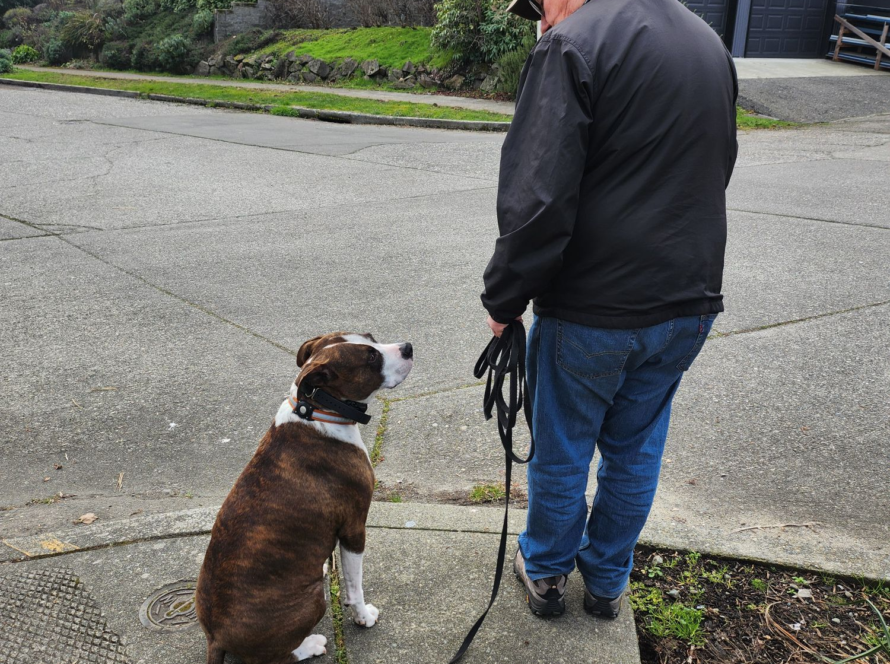
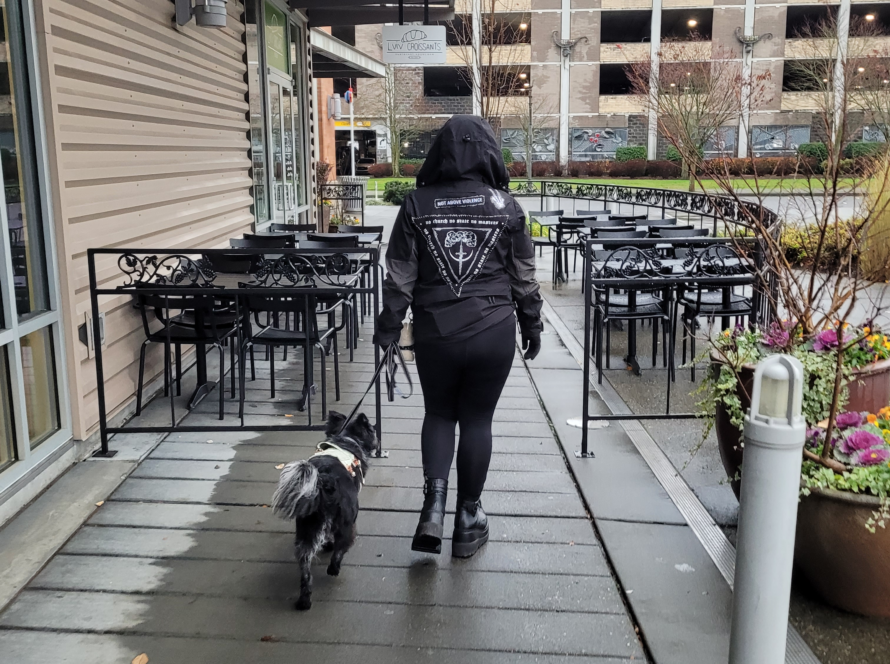
I n today’s world, it’s becoming increasingly common to see animals accompanying their owners in stores, on planes, and in housing that typically prohibits pets. As a dog trainer I have seen this lead to significant public confusion, and unfortunately, a dilution of the rights of those who truly depend on their animal partners. The terms “Service Dog” and “Emotional Support Animal” are often used interchangeably, but in the eyes of the law, they are distinct entities with vastly different definitions, training requirements, and legal protections.
This confusion is more than just a semantic debate; it has real-world consequences. Misrepresenting an untrained pet as a service animal is not only ethically wrong, but illegal. Additionally, it creates access barriers and public skepticism for individuals with legitimate disabilities. As a trainer deeply involved in the service dog world at Black Magic Dog Training in Washington State, I see the fallout from this confusion on a daily basis.
This guide is your definitive resource for cutting through the noise. I will dissect the legal frameworks, define the critical differences in training and function, and outline the specific rights granted to each classification. This knowledge is your first and most powerful tool in advocating for yourself, your animal, and the integrity of these vital support systems.
The Service Dog – A Legally Defined “Medical Device”
A Service Animal is not a pet. Under the Americans with Disabilities Act (ADA), a service dog is defined as a dog that has been individually trained to do work or perform tasks for an individual with a disability.
Let’s break down the critical components of this legal definition:
The Handler Must Have a Qualifying Disability:
The disability must be a physical or mental impairment that substantially limits one or more major life activities(e.g., walking, seeing, hearing, learning, breathing, working, or caring for oneself). A list of protected disabilities can be found on the ADA website, but can include:
- Psychiatric: Autism, ADHD, PTSD, anxiety, etc.
- Mobility: People who need support standing up, walking, opening doors, etc.
- Medical Alert: Diabetes, Siezure, etc
- Allergy: People with severe allergy who must avoid specific allergens reliably
- Guidance: Legally blind people requiring assistance navigating their environment
- Hearing: Deaf or hard of hearing people who may miss important sounds and auditory alerts
The Dog Must Be Individually Trained:
This is the non-negotiable core.The dog cannot simply provide comfort by its presence. It must be trained to perform specific, identifiable tasks that are directly related to mitigating the handler’s disability.
Examples of Legitimate Service Dog Tasks:
- For a person with PTSD: Interrupting panic attacks by applying Deep Pressure Therapy (DPT), alerting to rising anxiety levels before a full-blown attack, creating a buffer in crowds.
- For a person with a mobility impairment: Retrieving dropped items, providing balance support, opening doors, turning on lights.
- For a person with diabetes: Alerting to dangerous highs or lows in blood sugar.
- For a person who is blind or deaf: Guiding around obstacles, alerting to specific sounds like alarms or a name being called.
The “Work or Task” Requirement:
The provision of “emotional support, well-being, comfort, or companionship” does not constitute a work or task. This is the legal bright line that separates a service animal from an emotional support animal. The service dog is an active partner; its training allows it to act as a prosthetic, mitigating the person’s disability in a way the handler cannot do on their own.
The Emotional Support Animal (ESA) – A Prescription for Comfort
An Emotional Support Animal provides therapeutic benefit to an individual with a mental or psychiatric disability through its mere presence. It is essentially a prescribed pet.
An ESA’s role is to alleviate symptoms of a disability by providing comfort and companionship. No specific training is required. The animal does not need to perform any tasks, its presence simply brings the person comfort.
The Critical Legal Limitation:
ESAs are not service animals under the ADA. This is the most crucial point of confusion. Because they are not trained to perform specific tasks, they are not granted public access rights.
Where an ESA holds legal weight is in the realm of housing, under the Fair Housing Act (FHA). The FHA prohibits discrimination in housing, including against individuals with disabilities. A person with a legitimate ESA can, with proper documentation, live with their animal in “no-pet” housing and is exempt from pet deposits or fees.
A Side-by-Side Comparison of Rights
To make the distinctions crystal clear, here is a direct comparison of rights under U.S. federal law.
| Service Dog (under ADA) | Emotional Support Animal (under FHAA/ACAA) | |
| Public Access | YES. Allowed anywhere the public is permitted, such as grocery stores, restaurants, hotels, taxis, and hospitals. | NO. Not granted public access rights. Subject to the same pet policies as any other animal. |
| Housing | YES. Protected under both ADA and FHA. Must be allowed in “no-pet” housing without additional fees. | YES. Protected under the FHA. Must be allowed in “no-pet” housing without fees, provided a valid letter. |
| Air Travel | YES. Protected under the Air Carrier Access Act (ACAA). Allowed in the cabin without additional fees. | LIMITED. As of 2021, airlines are no longer required to accommodate ESAs. They are treated as pets, subject to carrier fees and policies. |
| Training Requirement | YES. Must be trained to perform tasks mitigating a disability. | NO. No specific training required. |
| Documentation | NO. Handlers cannot be asked for documentation or proof of disability/training in public. Only two specific questions are permitted. | YES. For housing, a valid letter from a licensed mental health professional is required, stating the need for the ESA. |
| Species | DOGS, although in some cases miniature horses may also serve as service animals | ANY animal that provides therapeutic support. May include dogs, cats, rabbit, birds, etc. |
The Two Permissible Questions & Handler Responsibilities
For businesses and the public, it’s vital to know what is legally allowed when encountering a service animal.
The Two Questions You ARE Allowed to Ask (and ONLY these two):
1. “Is the dog a service animal required because of a disability?”
2. “What work or task has the dog been trained to perform?”
You are NOT allowed to:
· Ask for documentation or a “certification” card.
· Ask about the person’s specific disability.
· Require that the dog demonstrate its task.
The Service Dog Handler’s Responsibilities:
- The dog must be under the handler’s control at all times (typically via leash, harness, or tether).
- The dog must be housebroken.
- The dog cannot pose a direct threat to the health or safety of others.
If a service dog is out of control, barking aggressively, or not housebroken, a business can legally ask for the animal to be removed.
Service Dog Fraud – Why This Distinction Matters
The proliferation of fake “certification” websites and the misrepresentation of pets as service animals is a serious problem with tangible consequences.
It Harms Legitimate Handlers: Fake service dogs are often untrained. Their poor behavior (barking, lunging, soiling in stores) creates public distrust and access challenges for highly trained, legitimate teams. Businesses become wary, leading to increased and sometimes even illegal questioning of legitimate handlers.
It Puts the Public at Risk: An untrained dog in a crowded grocery store can be a safety hazard, potentially causing distractions, allergies, food contamination, or even bites.
It Undermines the Law: It trivializes the profound partnership between a disabled individual and their meticulously trained service dog, turning a medical necessity into a perceived privilege.
There is no federally recognized certification, registration, or ID for service dogs in the United States. Any website selling such documentation is selling a product with no legal standing. A service dog is defined by its training and function, not by a vest or a card.
Clarity, the Cornerstone of Compassion
Understanding the legal chasm between a Service Dog and an Emotional Support Animal is not about gatekeeping; it is about preserving the integrity of systems designed to protect our most vulnerable. It is about ensuring that public spaces remain accessible for those who rely on their canine partners for daily safety and independence, and that housing remains available for those who derive genuine therapeutic benefit from an animal’s companionship.
The path of a service dog is one of immense dedication, time, and resources. It is a path we honor by respecting its legal and practical definitions. By educating ourselves and others, we can combat fraud, foster greater public understanding, and ensure these vital partnerships continue to thrive.
Whether you are considering a service dog for yourself or simply seeking to understand your rights and responsibilities, professional guidance is invaluable.
At Black Magic Dog Training, we specialize in the complex journey of service dog preparation and owner-training.
- Service Dog Prospect Evaluation: We assess a dog’s temperament, drives, and suitability for the immense demands of service work before you invest time and resources.
- Task Training & Public Access Preparation: Our programs focus on reliably training disability-mitigating tasks and proofing obedience in the complex environments a service dog must work in.
- Handler Education & Advocacy: We empower you with the knowledge to confidently and legally navigate public spaces, understanding both your rights and your responsibilities.
- Ethical Consultations: We provide honest advice on whether a service dog or an ESA is the appropriate path for your specific situation, ensuring you pursue the right legal and training framework.
Don’t let confusion define your journey. Whether you need clarity on the law or a partner in training, contact Black Magic Dog Training today. Let us help you build a foundation of knowledge and skill for a successful partnership.