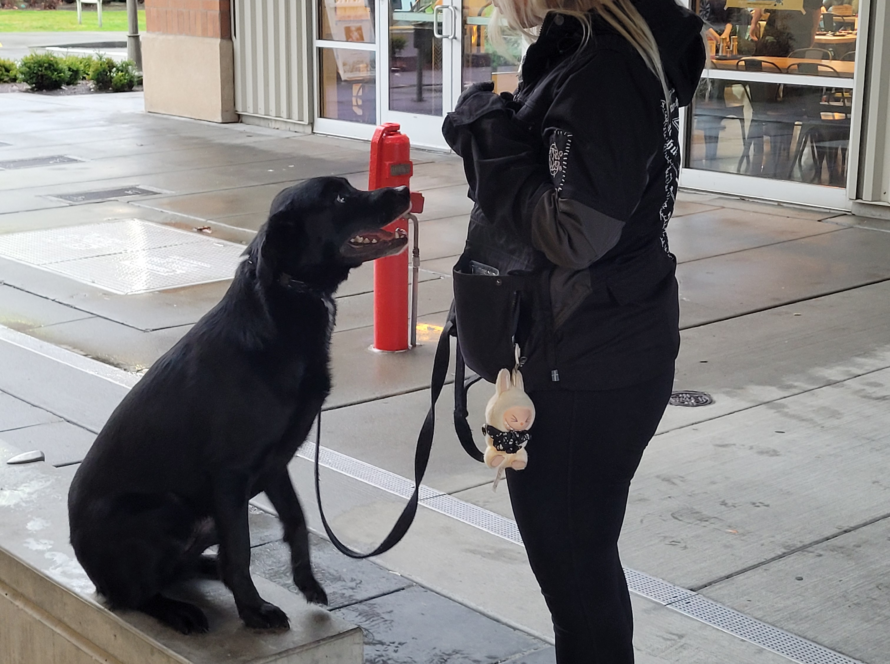
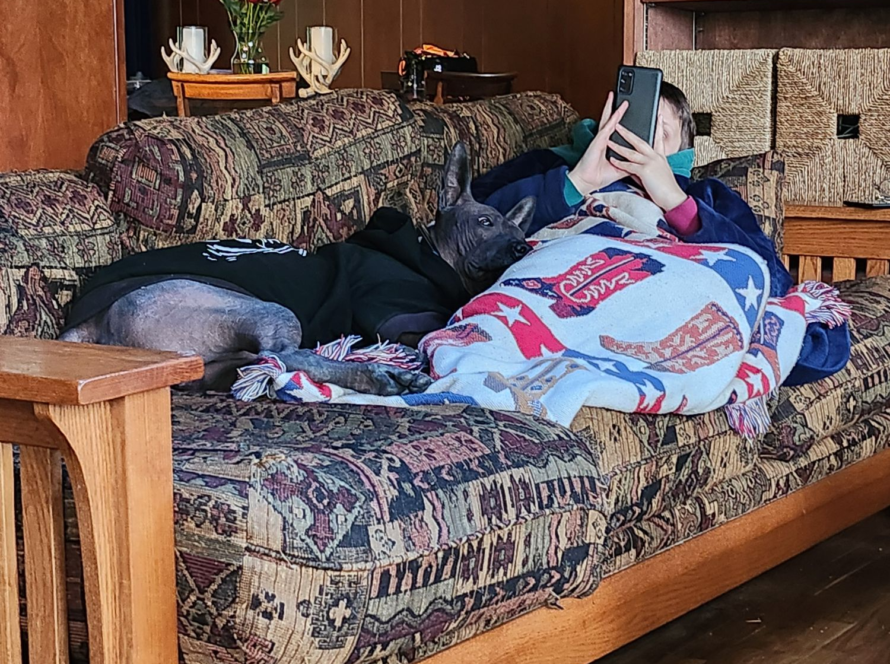
Theidea of group classes is simple and appealing: “Six-Week Puppy Kindergarten!” “Beginner Obedience Class!” For a reasonable price, you and your dog can join a group and learn the basics together. It seems like the perfect, structured solution, especially when offered by a familiar, national brand.
This is the promise of the one-size-fits-all group class. It’s designed for the mythical “average dog”—a blank slate, eager to please, and unfazed by the chaos of a dozen other unknown dogs and people in a sterile, echo-filled room.
But what if your dog isn’t “average”? What if they are a sensitive soul, a independent thinker, or a dog who finds other dogs overstimulating? At Black Magic Dog Training in Kent WA, I believe that forcing a unique canine spirit into a standardized box isn’t just ineffective; it can be a recipe for setting back their training, and even creating new behavioral ghosts.
This article isn’t an indictment of all group classes. After all, I run my own group classes and even include them as a free perk in all my one-on-one training packages! What this article is, is a guide to understanding their limitations. We will explore the hidden pressures and problems of the generic group dog training class and discover why a different path might be the true key to unlocking your dog’s potential.
The Five Cons of the Generic Group Class
The environment of a large, impersonal class creates specific, often overlooked, challenges that can hinder more than help.
The “Canine Crowd”
A group class is, by its very nature, a high-distraction environment. For many dogs, the presence of so many other dogs is not a minor distraction; it’s an overwhelming tidal wave of scent, sound, and social pressure.
In these classes, your dog isn’t learning to “sit.” They are learning to be stressed. Their brain is flooded with cortisol, shutting down the cognitive functions required for learning. They may shut down completely or become reactive out of fear or frustration. Instead of building a positive association with training, you’re building a negative one with other dogs.
Even happy-go-lucky dogs can get overwhelmed in a setting full of similarly-untrained dogs. And if they’re not overwhelmed, they’re incredibly distracted by all the other overwhelmed, excited dogs. You’re competing with so many other motivators, instead of creating a clean environment for your basics.
In my group dog training classes in the greater Seattle area, I focus on dogs who already have some basics. Group classes come with your private lessons, meaning you have a means to get your bearings before jumping into a more distracting environment. And because dogs need either a few private lessons or a readiness evaluation before joining, you can trust that your canine classmates will be under control and not overly distracting towards your dog as you refine over time.
The Missing Foundations
A proper “sit” isn’t just about the posture; it’s about the focus and engagement that precedes it. In a large class, even a very good instructor cannot possibly ensure that every owner has mastered the critical pre-skills: timing, marker word delivery, and leash handling.
You learn the command, but not the mechanics. Your timing is off by a second, you’re accidentally luring instead of cueing, or you’re creating tension on the leash. You practice this imperfection for six weeks, cementing sloppy technique that will be difficult to undo later.
Meanwhile, your instructor is busy tending to half a dozen other dogs and handlers, and isn’t able to give you the hands-on attention you need as a new dog owner.
“Cookie-Cutter” Curriculum
The lesson plan is set in stone, designed to move the entire group forward at the same pace. There is no room for deviation or special needs.
This means that if your dog hasn’t mastered “sit” by week two, the class moves on to “down” anyway. The curriculum, not your dog’s understanding, dictates the pace. This creates gaps in their learning and sets them (and you, as their actual trainer!) up for failure in more advanced steps that rely on a solid foundation.
The Echo Chamber of Poor Socialization
Many owners join a group dog training class for “socialization.” But true socialization is not about forced interaction; it’s about teaching a dog to be calm and neutral around other dogs. A chaotic class environment often does the opposite.
A shy dog may become more fearful. An over-aroused dog learns that being around other dogs mean it’s time to play (or yell). This can lay the groundwork for leash reactivity later in life, as the dog learns an excited or anxious emotional response to the presence of other dogs.
The Veil of Anonymity
With one instructor for ten or more dog-handler teams, individual attention is extremely compromised. Your specific struggles will likely go unnoticed and unaddressed if you haven’t already received one-on-one attention at an earlier time.
When your dog doesn’t get it, you don’t always get the help you need. You leave each session feeling frustrated and incompetent, and your dog feels your stress. The bond, which should be strengthening, begins to fray under a cycle of public failure.
This is why private lessons are best for making headway when you have a real goal on your hands, such as breaking through reactivity and fear or handling core obedience and reliability. Group classes are for practice and refinement, not for making the big moves in progress.
The Dogs Most Vulnerable to the “One-Size-Fits-All” Fallacy
While any dog can struggle, certain profiles are particularly ill-suited for this environment.
The Sensitive Soul: Dogs who are naturally cautious or fearful. The overwhelming environment can be traumatic, confirming their worst fears about the world. These dogs especially need more one-on-one attention with a behaviorist before they are ready for this setting.
The Independent Thinker: Independence is a genuine hurdle for many primitive breeds like Shiba Inus, Xoloitzcuintlis, and Nordic spitzes. They are not easily motivated by pleasing a crowd and will simply disengage, earning them a false “stubborn” label. As a handler, it’s important to learn to foundations of motivation and do some work on drive building prior to asking them to perform in a group class setting.
The Reactive or Over-Aroused Dog: For these dogs, a group class is like throwing someone with a fear of crowds into a mosh pit. What’s worse, many trainers offer dog reactivity group classes, by collecting a group of fresh reactive dogs and asking them to exist in a room together. This isn’t just counter-productive, it’s dangerous. Reactive and aggressive dogs need dedicated behavior modification training in a private lesson or board-and-train format, not basic obedience in a triggering environment.
The Dog with a Job: Service dog prospects, sport dogs, or high-drive working breeds. Their training needs are precise and advanced, far beyond the scope of a beginner pet manners class. Pet group classes run by trainers who exclusively train pet dogs is a recipe for disaster when it comes to dogs who hope to reach a higher level of training down the road. For service dogs, sport dogs, and guard dogs, skip the generic group class and book one-on-one private lessons instead.
The Power of Individualized Training
So, what is the alternative? It is a path that treats your dog not as a widget on an assembly line, but as a unique individual requiring a custom-made solution.
This is the foundation of my philosophy at Black Magic Dog Training. Instead of forcing your dog to adapt to a rigid curriculum, we build the training around your dog’s specific mind, motivations, and challenges.
The Pillars of an Individualized Approach:
Diagnosis Before Prescription: I don’t assume your dog’s pulling is just “excitement.” I will always determine if it’s frustration, prey drive, lack of engagement, or a mix of reasons. The root cause dictates the solution.
Training in Your World: Lessons happen in your home and neighborhood—the very places where the problems occur. I proof the “sit” with your doorbell ringing. I practice “leave it” or with your cat walking by. This is where real learning happens.
Pacing for the Pupil: I always move at your dog’s pace. It’s non-negotiable. If we need to spend three sessions perfecting a single skill to build confidence, we do. Mastery, not checking a box, is the goal.
You Are the Focus: My primary student is always you. I train your hands, your timing, and your energy. You learn to read your dog’s subtle body language and respond appropriately. In private lessons, I am teaching you to be your dog’s lifelong guide.
A Realistic Comparison of Experience: Group Classes vs Private Lessons
Let’s compare how a core skill is taught in each model.
In the Group Class:
- The instructor demonstrates a food lure for “sit” at the front of the room, using either their own trained demo dog or the best-behaved student among the dogs present.
- You try it. Your dog is distracted by the German Shepherd barking two mats over.
- The instructor, busy with another team, doesn’t see your struggle.
- You leave having practiced a distracted “sit” (or a failure to sit) dozens of times. The skill has no foundation in focus and you may have even taught your dog an incorrect movement pattern for long-term mastery of the behavior.
In an Individualized Session:
- We first work on building your dog’s focus on you in your quiet living room, using a marker word.
- We teach the “sit” with precision, ensuring your timing is flawless and the reward is high-value.
- Only when it’s perfect there do we add a distraction, like a knocked-over pillow.
- We systematically “proof” the behavior, building a “sit” that is reliable because it’s built on a rock-solid foundation of engagement.
- At this point, we can start some group classes to continue refining and proofing the behavior! Now, you’re prepared to practice with other dogs around, and don’t need nearly as much individualized attention. You’ve graduated into higher distractions.
Investing in a Tailored Solution, Not a Mass-Produced One
A one-size-fits-all group class can seem like a cost-effective solution. But when it fails to address your dog’s needs, sets back their training, or creates new anxieties, the true cost—in time, frustration, and your dog’s well-being—is far higher.
Investing in individualized training is an investment in a specific outcome: a dog that listens to you, in your life, and a partnership built on understanding and clear communication. It is the difference between buying a suit off the rack and having one tailored specifically to your measurements. One might fit okay. The other is guaranteed to fit perfectly.
Your dog is not a generic pet. They are an individual with a unique history, a unique mind, and a unique place in your heart. Their education should be just as unique.
If the thought of a chaotic group class fills you with dread, or if you’ve already tried one and hit a wall, it’s time for a different approach. At Black Magic Dog Training, I specialize in crafting bespoke training solutions for the dogs who don’t fit the mold.
Don’t force your square-peg dog into a round-hole class. Embrace the power of a tailored approach. Contact Black Magic Dog Training today to begin a training journey designed exclusively for you and your canine companion.