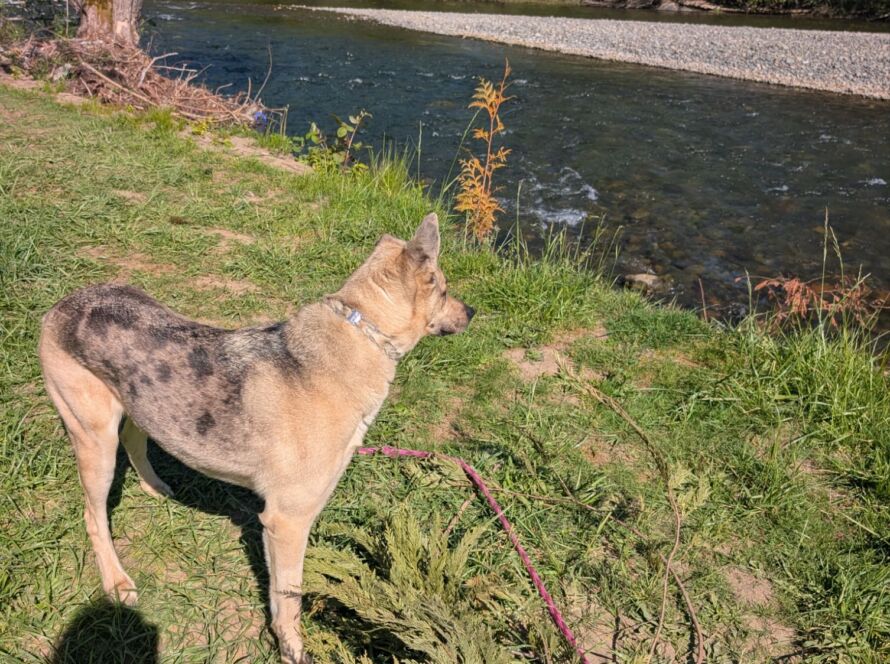
The scene is a familiar one for many owners: a peaceful walk shatters in an instant. Your dog locks onto a squirrel, a twitchy, silent statue for a heartbeat before exploding into a frantic, screaming lunge. The force is primal, the focus absolute. In that moment, the loving family pet vanishes, replaced by a creature of pure instinct.
To many owners, these behaviors can look aggressive.
In reality, they often have nothing to do with aggression at all.
They’re examples of prey drive—a natural instinct that has been selectively bred into dogs for thousands of years. Understanding the difference between prey drive and aggression is one of the most important steps in choosing the right training approach.
At Black Magic Dog Training, we frequently work with owners who worry that their dog’s prey-driven behavior means they have an “aggressive dog.” Fortunately, these are often very different issues that require different management and training strategies.
What Is Prey Drive?
Prey drive is the instinctive sequence of behaviors that predators use to locate, pursue, capture, and sometimes kill prey.
Although dogs have lived alongside humans for thousands of years, they still retain many of these natural instincts.
Different breeds have been selectively developed to emphasize or reduce various parts of the predatory sequence.
For example:
- Border Collies were bred to stalk livestock without biting them.
- Retrievers were bred to chase and gently retrieve birds.
- Terriers were bred to locate and dispatch rodents.
- Sighthounds were bred to pursue fast-moving prey over long distances.
- Livestock guardian dogs were selectively bred to suppress much of the chase instinct so they could live peacefully with livestock.
Every breed—and every individual dog—expresses prey drive a little differently.
The Predatory Sequence
Animal behaviorists often describe prey drive as a sequence of behaviors.
Although dogs don’t always complete every step, the sequence generally includes:
- Orient
- Eye (stare)
- Stalk
- Chase
- Grab bite
- Kill bite
- Dissect
- Consume
Selective breeding has modified these stages depending on the job humans wanted dogs to perform.
For example, a Border Collie may spend much of its energy in the “eye” and “stalk” phases, while a Labrador Retriever has been bred to chase and retrieve without damaging game.
Understanding which parts of the sequence your dog enjoys can help explain many everyday behaviors.
Common Signs of High Prey Drive
Dogs with strong prey drive may:
- Chase squirrels or rabbits
- Become intensely focused on birds
- Lunge toward moving animals
- Fixate on fast-moving objects
- Shake toys vigorously
- Chase bicycles or skateboards
- Stalk wildlife during walks
- Become highly excited by flirt poles or moving toys
These behaviors are often driven by instinct rather than fear or hostility.
Prey Drive Is Not the Same as Aggression
One of the biggest misconceptions in dog training is that prey drive automatically equals aggression.
It doesn’t.
Aggression generally involves behaviors intended to increase distance from a perceived threat or to protect valuable resources. Fear, frustration, pain, territoriality, and resource guarding are all common motivations for aggressive behavior.
Prey drive, on the other hand, is directed toward pursuing something the dog finds rewarding to chase or capture.
A dog may happily play with other dogs at the park yet instantly chase a rabbit that runs across the field.
Likewise, a dog with a high prey drive may show no aggression toward people whatsoever.
The motivation behind the behavior matters.
Can High Prey Drive Be Dangerous?
Yes.
While prey drive isn’t aggression, it can still create serious safety concerns.
A dog with a strong chase instinct may:
- Chase wildlife across roads.
- Pursue neighborhood cats.
- Grab small animals.
- Pull owners off balance during walks.
- Escape fenced yards.
- Ignore recall when highly aroused.
Large dogs with intense prey drive can unintentionally injure smaller animals, even if they have friendly personalities in other situations.
Because of this, management is just as important as training.
Which Breeds Tend to Have High Prey Drive?
Individual temperament always matters more than breed stereotypes, but some breeds are generally known for stronger prey instincts.
These often include:
- Belgian Malinois
- German Shepherd Dogs
- Border Collies
- Australian Cattle Dogs
- Jack Russell Terriers
- Rat Terriers
- Whippets
- Greyhounds
- Salukis
- Siberian Huskies
- Alaskan Malamutes
- Weimaraners
- Vizslas
- German Shorthaired Pointers
Of course, mixed-breed dogs may also have significant prey drive depending on their genetics.
Can You Train Away Prey Drive?
Not completely.
Prey drive is an instinct—not a behavior that can simply be erased.
However, you can teach dogs how to respond appropriately when that instinct is triggered.
Training focuses on building:
- Reliable recall
- Impulse control
- Engagement with the handler
- Appropriate outlets
- Strong leash skills
- Emergency behaviors
- Environmental management
The goal isn’t to eliminate instinct.
The goal is to give dogs better choices while keeping everyone safe.
Healthy Outlets for Prey Drive
Trying to suppress prey drive completely often leads to frustration.
Instead, many dogs benefit from appropriate ways to express those natural instincts.
Healthy outlets include:
Flirt Pole Training
A flirt pole allows dogs to chase a moving toy in a controlled setting while practicing impulse control and recalls.
Fetch
Many dogs satisfy portions of the chase sequence through structured games of fetch.
Teaching rules like “drop,” “wait,” and “release” keeps the game safe and productive.
Fast CAT and Lure Coursing
These organized sports give dogs an appropriate opportunity to chase a mechanically operated lure.
They’re especially popular with sighthounds and athletic breeds.
Nose Work
Some prey-driven dogs also thrive when given opportunities to hunt with their noses rather than their eyes.
Scent work provides intense mental enrichment while channeling natural hunting instincts into a controlled activity.
Structured Tug
Contrary to old myths, properly taught tug games do not create aggression.
Instead, they can improve impulse control, engagement, and communication when played with clear rules.
Management Matters
Even the best-trained dog remains a dog.
Management helps prevent instinctive behaviors from becoming dangerous.
Good management may include:
- Keeping dogs leashed around wildlife.
- Using secure fencing.
- Supervising interactions with small pets.
- Practicing recalls before allowing off-leash freedom.
- Walking with appropriate equipment.
- Avoiding situations beyond your dog’s current skill level.
Management isn’t failure—it’s responsible ownership.
When Prey Drive and Reactivity Overlap
Sometimes prey drive and reactivity can look very similar.
For example, a dog may bark and lunge toward bicycles because they want to chase them—not because they’re afraid.
Another dog may display nearly identical behavior because bicycles genuinely frighten them.
Although the outward behavior appears the same, the underlying motivation—and therefore the training plan—is different.
This is why professional evaluation is so valuable.
Treating fear like prey drive—or prey drive like fear—can slow progress and create unnecessary frustration.
How Black Magic Dog Training Can Help
Understanding why your dog is chasing is the first step toward changing the behavior. At Black Magic Dog Training, we evaluate each dog as an individual rather than making assumptions based solely on breed or outward behavior.
Whether your dog has a powerful prey drive, struggles with leash reactivity, or simply becomes overly excited by moving objects, we’ll help you build practical skills that improve safety without trying to suppress your dog’s natural instincts. Through personalized training, impulse control exercises, reliable recalls, and appropriate enrichment, we help dogs learn to make better choices while still enjoying healthy outlets for the behaviors they were born to perform.
Final Thoughts
Prey drive is one of the many instincts that makes dogs such fascinating companions. It’s neither good nor bad—it’s simply part of being a dog.
Rather than viewing prey drive as a problem to eliminate, successful owners learn to understand it, manage it responsibly, and provide safe, appropriate opportunities for their dogs to express those instincts. With the right training and realistic expectations, even dogs with intense prey drive can become reliable family companions and enjoyable adventure partners.
If your dog is constantly chasing wildlife, fixating on moving objects, or leaving you wondering whether you’re dealing with instinct or aggression, Black Magic Dog Training can help you identify the cause and create a training plan tailored to your dog’s unique personality and needs.