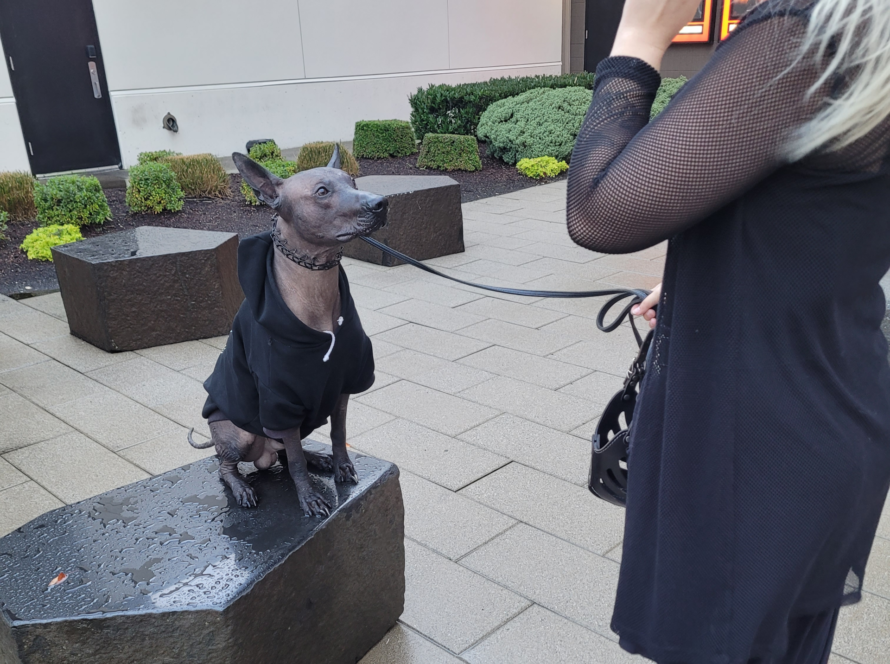
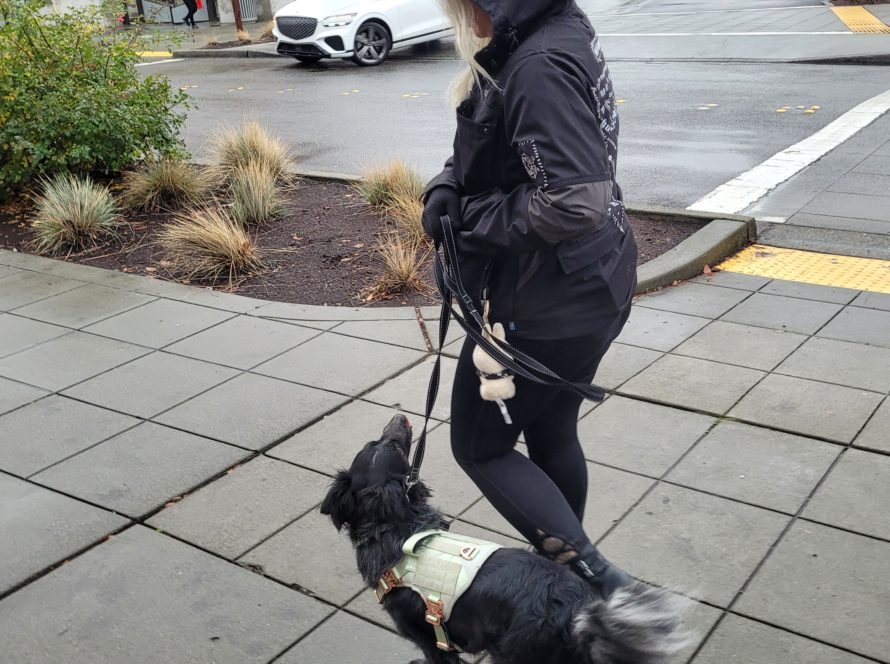
Thereis a unique quality in the gaze of a primitive breed. This is not the look of a domesticated Labrador Retriever or intense Beligian Malinois. This is the look of the ancient world, of a canine mind that solved problems and survived for millennia without direct human instruction. These breeds—the spitz-types, the pariah dogs, the ancient hunters—are not “stubborn.” They are partners that evolved alongside us, not beneath us.
Primitive dogs are brilliant, independent, and hardwired for self-preservation. And this is precisely why the modern, purely positive, “cookie-only” training model often fails with them. It attempts to bribe a CEO when what they truly respect is a competent business partner.
At Black Magic Dog Training in Kent WA, I specialize in the esoteric art of communicating with these ancient souls. I believe that to train a primitive breed, you must speak a language they understand—a language of clear cause and effect, of fair consequences, and of profound respect. This is the realm of Balanced Dog Training, and for the primitive dog, it is not just a method; it is the only conversation that truly resonates.
Understanding the “Untamable” Mind of the Primitive Dog
To apply the right training, you must first understand the raw material you are working with. The primitive mind operates on a different operating system than that of a biddable herding or retrieving breed.
Key Behavioral Traits of the Primitive Canine:
- Profound Independence: Bred to hunt, think, and act miles away from human guidance, their default setting is self-reliance. They constantly ask, “Why should I?” and demand a compelling answer. But don’t mistake independence in choice for anti-social; many primitive dogs are known for being deeply bonded to their favorite person.
- Low Biddability, High Intelligence: My Xoloitzcuintli is the smartest dog I’ve ever owned, and the least biddable. A primitive dog learns a command in three repetitions and spend the next thirty determining how to bypass it for their own benefit. Their intelligence is pragmatic, not servile.
- Sensitivity to Energy and Pressure: These dogs are finely tuned instruments for reading their environment. They sense frustration, uncertainty, and unfairness with stunning acuity. Heavy-handed corrections will shatter them, but a lack of any pressure creates a vacuum of leadership they feel compelled to fill.
- High Prey Drive and Environmental Focus: Their instincts are powerful and close to the surface. The rustle of a leaf can be more compelling than a piece of steak if the communication from the handler is not equally powerful and clear.
Attempting to train such a creature with only one half of the communication spectrum—endless rewards with no clear information about wrong choices—is like trying to navigate with only a “green for go” light. Without the “red for stop,” you are left with guesswork, frustration, and a dog that views you as a vending machine, not a leader.
The Balanced Path: A Language of Clarity, Not Force
Balanced training is often misunderstood. For the primitive breed, training should not about “being alpha” or using force. It is about providing a complete and honest conversation.
What Balanced Training Is:
A communication system that uses both:
1. Reinforcement: To mark and reward desired behaviors, telling the dog, “Yes, that is exactly what I want!”
2. Fair Pressure & Release: To provide clear, consequence-based information about undesirable behaviors, telling the dog, “That choice is incorrect.”
The goal is not to intimidate, but to inform. The primitive dog’s problem-solving mind understands this language intuitively. Pressure is not punishment; it is subtle feedback. The release of pressure (and subsequent reward) is the answer. It is the language of the wild, where actions have immediate and logical outcomes.
The Balanced Toolkit for the Primitive Dog
Applying balance to a sensitive, independent breed requires the precision of a watchmaker and the patience of a saint. Here is how we adapt the core tools.
The Power of the “Yes!” Marker: Building Desire
This is your foundational tool. A sharp, consistent marker (a clicker or the word “Yes!”) is non-negotiable.
Use it to capture and build any and all engagement. When your primitive dog voluntarily offers you eye contact, mark and reward. You are building the value of connecting with you in a world full of more interesting distractions. Use ultra-high-value rewards—dried liver, chopped hotdog, fresh fish, a favorite tug toy. You are not just giving a treat; you are building a partnership.
The Art of the “No” Marker: Providing Information
This is the informational counterpart to your “Yes.”
The moment your dog makes an incorrect choice (e.g., starts to jump up, puts paws on the counter), use a calm, neutral “No.” This is not a shout. It is an interrupter, a “red light.” The instant your dog stops the behavior, you can mark and reward an alternative behavior (a “sit”), creating a clear “no/yes” dynamic.
The Leash as a Communication Device
For a primitive breed, the leash is one of the most powerful tools for teaching boundaries and spatial awareness.
In my dog training lessons, I teach that light leash pressure is not something to pull against, but a signal to return to the handler. Apply gentle, sustained pressure on the leash. The moment the dog yields to the pressure—even a single step—the pressure INSTANTLY releases, and you mark (“Yes!”) and reward. This teaches the dog that they have control over the pressure and that compliance not only turns pressure off, but gleans additional rewards as well.
Yes-Release-Treat is a potent three-reward sequence.
The Prong Collar: The Misunderstood Precision Tool
Prong collars are one of the most misunderstood training tools on the market today, even being banned in some communities! Truth is, prong collars are a tool, and only a tool. Like food, a leash, or a hand, a prong collar can be used to provide information, or to abuse.
At Black Magic Dog Training, I often employ the use of “The Training Collar,” previously known as the Kinder Collar. It is a prong collar lookalike that has curled prongs rather than points. This makes the collar less intense of a sensation compared to a traditional prong collar, and more durable than softer plastic prong collars which are prone to breaking.
For traditional prong collars, many pros like herm-sprenger for quality, but I personally prefer Kimberland Collars right here in Washington State. I like Kimberland for their multiple sizes catering to all types of dogs, which helps provide clear communication for fluffy, hairless, large, small, and anywhere-in-between dogs.
For a thick-coated, stubborn Spitz that is completely oblivious to flat collar or harness pressure, a properly fitted prong collar distributes pressure evenly around the neck, creating a clear, blunt signal that is often less stressful than the constant choking and fighting against a flat collar or the complete obliviousness of a harness.
I use the prong not as a punishment, but as a source of clear, binary information. It is a tool to proof known commands and create reliable off-leash recall, speaking a language of pressure and release that the primitive mind deeply respects.
A Ritual of Respect: The Balanced Training Session
A training session with a primitive breed is a negotiation, not a dictatorship. It often includes building engagement, drive, and a love for the game that might come pre-installed on “easier” dog breeds.
The Warm-Up: Start with 60 seconds of high-energy, high-reward engagement. Practice known behaviors like “touch” or “sit” to get them in the working mindset, or engage them in play and mix rewards in to the session.
The New Skill: Work on one new concept. Use luring and marking to show them what you want. The moment they show independence or resistance, use your informational marker or gentle leash pressure to guide them, releasing and rewarding the moment they comply.
The Cool-Down: End with a behavior they excel at, rewarding it lavishly. This concludes the session on a note of success and partnership, and keeps your primitive dog looking forward to the easy jackpot in every training session, increasing their engagement during the “slog.”
What to Avoid at All Costs:
Emotional Outbursts: Your frustration is kryptonite. It confirms their suspicion that you are an unstable partner.
Repeating Commands: Say it once. If they don’t comply, it’s not a hearing problem; it’s a motivation or understanding problem. Use your tools to provide clarity, not your voice to create noise.
Nagging with Pressure: Applying constant, unyielding pressure will make them shut down. Pressure must be momentary and released the instant the dog makes a move in the right direction.
Case Study: The Aloof Shiba and the Sacred “Recall”
A client came to me with a Shiba Inu who would famously “Shiba scream” and refuse to come when called if something more interesting was present. The purely positive approach had failed; the dog knew the command but saw no compelling reason to obey it, and screamed at any sense of pressure.
My Balanced Approach for this Primitive Dog:
Foundation: I helped my client built an incredibly high-value “Yes!” marker using dehydrated salmon.
Long-Line & Pressure/Release: We used a 30-foot long-line. We would call “Come!” once. If he ignored it, we applied light, steady pressure on the line, pulling him toward us. If he did his patented Shiba scream, we held but did not increase the pressure. The second he took a single step in our direction, the pressure released, and we marked and rewarded with the salmon.
The Revelation: The dog quickly learned that “Come” wasn’t a suggestion, but a clear directive with a pleasant outcome. The pressure was not painful; it was simply a persistent, undeniable signal that could not be ignored. The release and reward made compliance his choice and his victory.
Within weeks, the recall was reliable. We didn’t break his spirit; we gave him a language he understood, transforming a battle of wills into a collaborative game.
Training a primitive breed with a balanced methodology is the highest form of respect you can pay them. You are acknowledging their intelligence, their independence, and their right to make choices, while also providing the clear, consistent leadership that their ancient souls secretly crave.
That said, the path of balanced training for primitive breeds is nuanced and complex. A misapplied technique can create setbacks, while a well-timed intervention can build an unbreakable bond. If you are in Kent, Renton, Maple Valley, or the greater Seattle area, and share your life with a Shiba, Xolo, Akita, Basenji, or any other independent spirit, the Black Magic Dog Training is here to help.
Stop the frustration and start the conversation. Contact Black Magic Dog Training today, and let us help you build the pact of respect and understanding your primitive companion deserves.