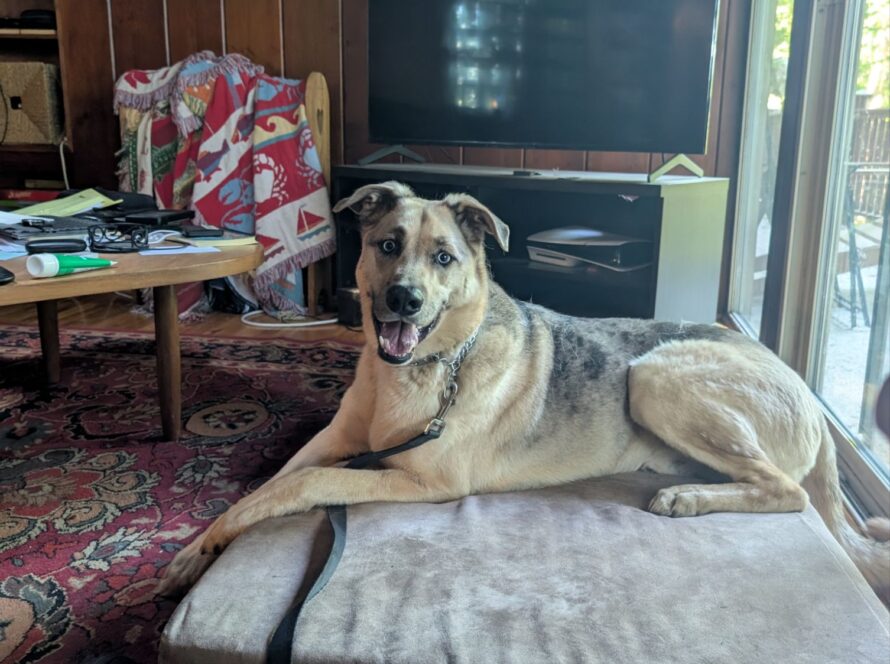
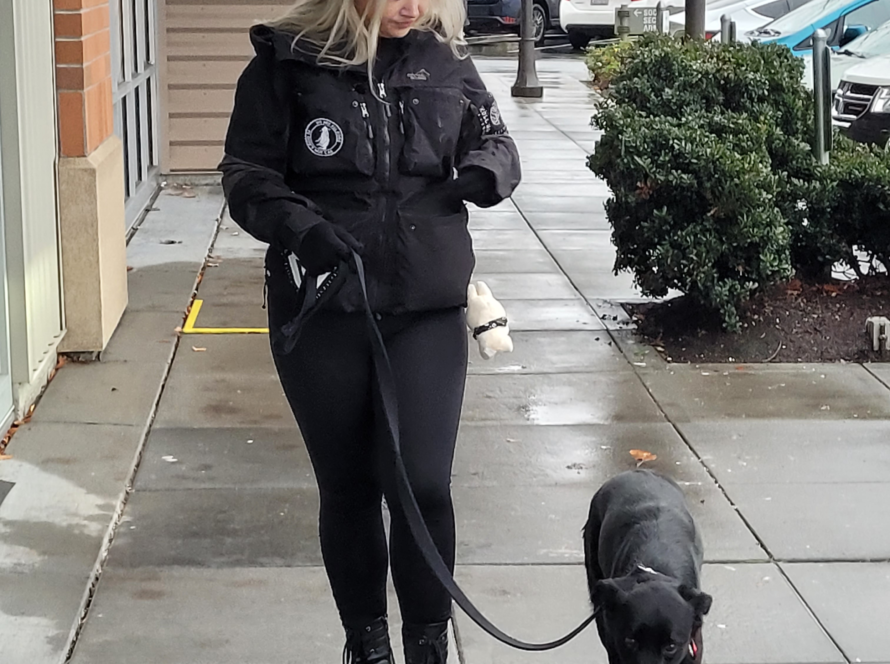
There are a lot of arguments in dog training.
Treats or corrections, harnesses or collars, clickers or verbal markers, “force free” or balanced training. Spend enough time researching dog trainers online and you can quickly feel like you’re being asked to choose a side.
But here’s the problem:
You didn’t start looking for a dog trainer because you wanted to join a dog-training philosophy.
You started looking because you need help with your dog.
You wanted to get relief from being dragged down the street, jumped on all the time, dealing with constant explosive reactivity, or the general chaos of raising a puppy in the already-overwhelming world we live in today.
Whatever brought you here, your trainer’s first dedication should be to helping you and your dog succeed—not proving that their favorite method is the answer to every problem.
Your Dog Doesn’t Care About Dog-Training Politics
Your dog has never read an argument about training quadrants on Facebook. They don’t know what training “camp” their trainer belongs to. They don’t care which acronym appears after someone’s name.
Your dog understands consequences, associations, patterns, reinforcement, environmental feedback, and communication.
And most importantly:
Your dog is an individual.
The technique that works beautifully for one dog may be ineffective for another. A dog who will enthusiastically work for kibble presents a different training picture from a dog who refuses steak the moment another dog appears. A puppy learning basic manners needs something different from an adult dog with a long history of serious behavioral problems.
Methods are useful. But the moment preserving the method becomes more important than helping the dog, we’ve reversed the priorities.
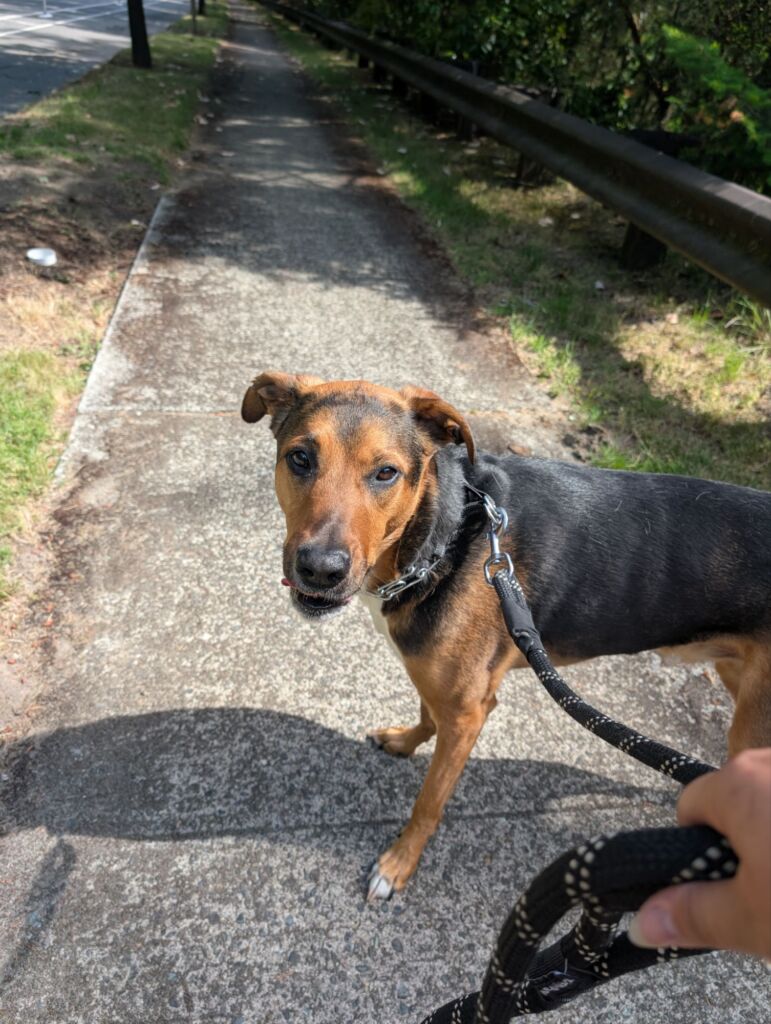
You Shouldn’t Have to Fit Your Dog Into Someone Else’s System
At Black Magic Dog Training, I describe my approach as balanced because I’m not interested in unnecessarily restricting the ways I can communicate with a dog.
I use reinforcement extensively. Food, play, praise, markers, access to things the dog wants, and other rewards can all be powerful teaching tools.
I also believe appropriate boundaries and consequences have a place in training. Depending on the dog and the goal, I may use different equipment and techniques.
But being a balanced trainer doesn’t mean every dog automatically receives every tool in the toolbox.
Having more options doesn’t mean using all of them on every dog.
It means having the flexibility to select what makes sense. A training tool should have a purpose. In the same vein, a fair correction should have a purpose and a reward should have a purpose.
And if something isn’t helping us communicate more effectively or move toward the owner’s goals, I want to know why we’re doing it.
The Best Method Is the One That Works for the Dog in Front of You
There’s an important qualification here.
“Whatever works” shouldn’t mean doing absolutely anything that produces a behavior. Effective training still requires judgment.
We should consider the dog’s emotional state, clarity, welfare, learning history, temperament, safety, and the owner’s ability to reproduce the training.
But within those boundaries, I care much more about results than ideological purity.
If something isn’t working, I want to adjust. We tinker with the reinforcement schedule, the criteria, the progression level, the environmental factors, assess the level of clarity, our management, boundaries, and sink deeper into underlying issues.
Changing the plan when the evidence changes isn’t inconsistency.
It’s good training.
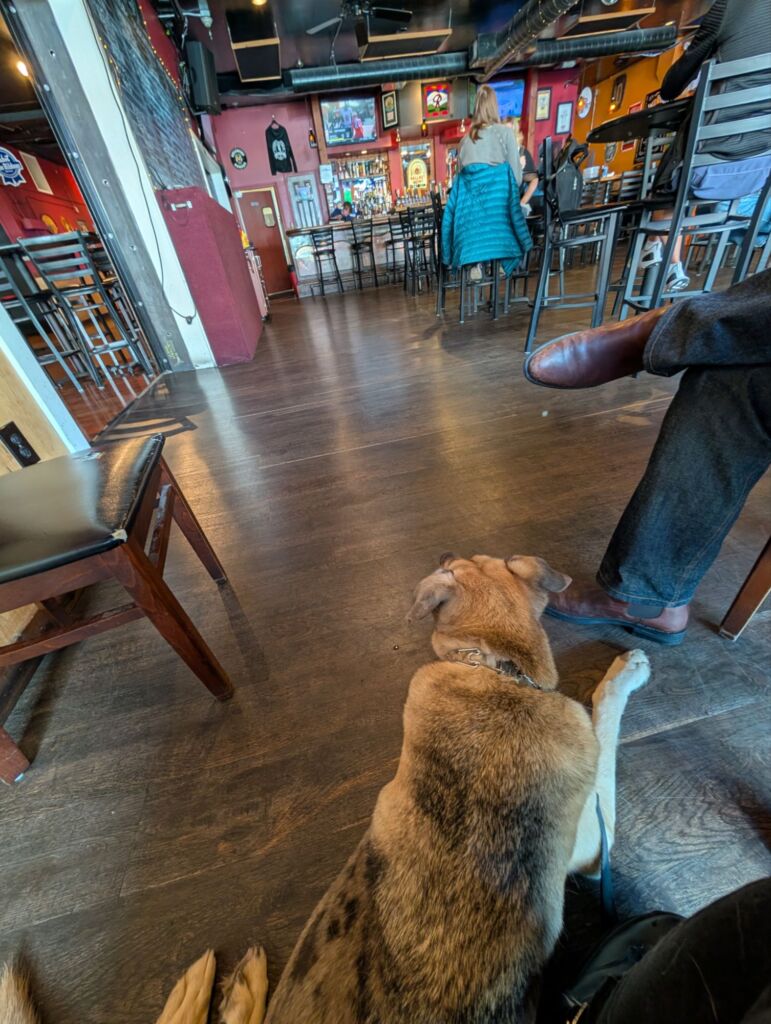
Your Goals Matter, Too
There’s another individual in the training equation who sometimes gets overlooked: You.
Your trainer isn’t going home with your dog forever. You are. So a training program needs to work for the human household as well as the dog.
Suppose someone creates an elaborate training routine that produces wonderful results—but maintaining it requires two hours every day. That’s not particularly helpful if you realistically have twenty minutes at a time.
Or perhaps a trainer can handle your dog beautifully using a particular technique, but you leave every lesson confused and unable to reproduce it. That’s a problem that many trainers don’t prepare themselves to address.
The goal isn’t to demonstrate how well a professional dog trainer can handle your dog.
The goal is to make you more successful with your dog.
That means I need to understand what you actually want.
Do you want pleasant neighborhood walks? Reliable off-leash freedom? A dog who can relax when guests visit? A puppy who can function peacefully in your household? A working or service dog capable of meeting a much higher standard?
Those goals influence the training plan.
Good Training Should Work Outside the Training Session
A dog can look spectacular during a controlled training demonstration.
Real life is messier. The Amazon driver arrives, a squirrel runs across the sidewalk, your teenager accidentally leaves food on the counter, another dog suddenly appears around a corner.
That’s where training ultimately has to survive.
I’m not interested in creating obedience that exists only when conditions are perfect.
The skills we teach should eventually make ordinary life with your dog easier.
That’s one reason Black Magic Dog Training offers different ways to train.
For some families, private lessons make the most sense because the owner wants to be deeply involved from the beginning.
For others, daycare training or day trains provide professional repetition without sending the dog away for an extended stay.
And some dogs and owners benefit from the immersion of a board-and-train program.
The format should serve the goal, not the other way around.
Your Trainer Should Be Able to Explain Why
You don’t need to become a professional dog trainer to work successfully with your dog.
But you deserve to understand what’s being done.
If a trainer recommends a particular exercise, tool, or technique, asking “Why?” is completely reasonable.
Why this tool? Why this exercise? What are we teaching? What should I look for? How will we know when the dog understands? How does this move us toward my goal?What happens if it doesn’t work?
A good trainer shouldn’t be threatened by those questions.
There may be situations where the full explanation involves more learning theory than you ever wanted to know.
That’s okay.
But there should still be an explanation.
Methods should be chosen deliberately, not followed like religion.
Look for a Trainer Who Can Change Their Mind
One of the qualities I value most in dog training is adaptability.
Dogs are constantly giving us information. A training plan might look perfect on paper and behave very differently once we actually begin working with the dog.
That’s useful information.
Sometimes the dog progresses faster than expected. Sometimes we discover an entirely different issue underneath the behavior the owner originally described. Sometimes a technique I expected to work simply isn’t producing the result I want with a specific dog.
I believe in the techniques I use, but I also don’t think the professional response is to defend the technique if it is not helping the dog in front of me.
I think the correct response is to reassess the dog.
Good trainers should have principles. But they should also be capable of changing course, because the dog and the human in front of us need training that fits them.

You Are Hiring a Problem Solver
When you hire a dog trainer, you’re not really purchasing a collection of training exercises.
You can find thousands of those online for free.
You’re hiring someone to look at your dog, listen to what you’re experiencing, identify what’s happening, and build a path from where you are now to where you want to be.
You’re hiring a problem solver.
Methods and tools are part of that process, but they aren’t the purpose of it. So when you’re interviewing trainers, pay attention to what they’re dedicated to.
Are they primarily trying to convince you that their philosophy is correct?
Or are they trying to understand your dog, your problem, your goals, and your life?
At Black Magic Dog Training, I know where I want that dedication to land.
With the person who asked me for help and the dog standing beside them.
Training Built Around Your Dog
Black Magic Dog Training provides individualized dog training in Kent, Maple Valley, and surrounding South King County communities.
I offer private dog training, daycare training/day trains, board-and-train programs, puppy training, behavior modification, off-leash training, and other personalized training options.
You don’t need to arrive knowing which method, tool, or program your dog needs.
That’s part of my job.
Bring me the problem. Bring me your goals. And, most importantly, bring me the dog you actually have.
We’ll build the training plan from there.