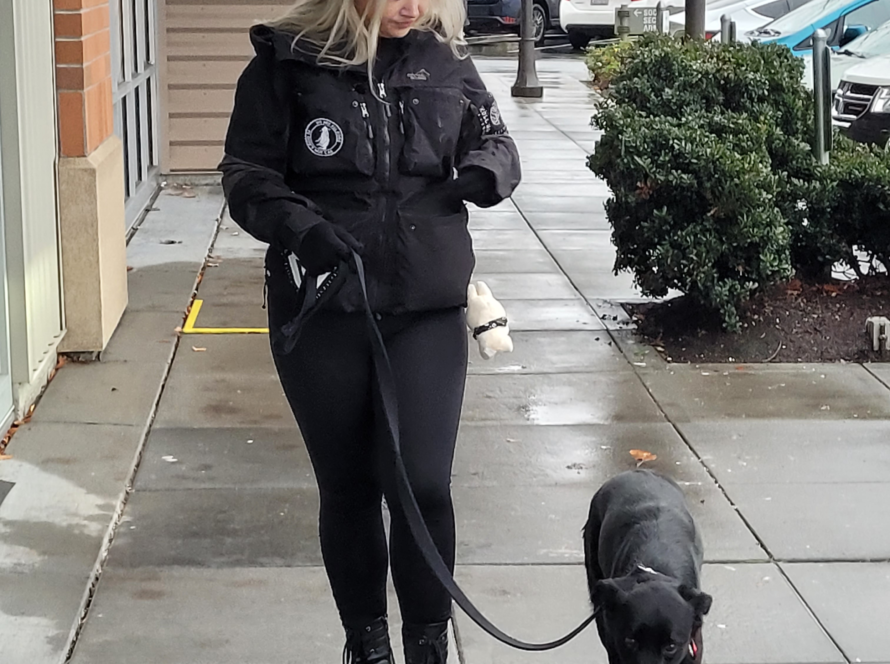
One thing that I wasn’t prepared for when I first began training around ten years ago is…dog training has a strange way of becoming…ideological.
Spend enough time online and you’ll find people arguing about which quadrants of operant conditioning you’re allowed to use, which tools make someone a “good” or “bad” trainer, whether every problem can be solved with enough treats, or whether every difficult dog simply needs to be yanked around until they give up or shut down.
Meanwhile, there’s an actual dog standing at the other end of the leash.
That’s the dog I’m interested in.
At Black Magic Dog Training, my approach is balanced, individualized, and grounded in the science of how animals learn.
But there’s another part that’s equally important: The training has to work in real life.
My goal isn’t to prove allegiance to a training philosophy. It’s to help you communicate more clearly with your dog and create behavior that makes your life together better.
That’s what I mean when I say my approach is built on dedication to science and devotion to results.
Dog Training Is Applied Learning Theory
Despite the (iconic, might I add) brand name, there’s actually no black magic involved in dog training.
The science of learning is that dogs learn through consequences, associations, repetition, reinforcement, environmental feedback, and patterns.
When behaviors produce desirable outcomes, they’re more likely to happen again. When behaviors consistently stop producing the desired outcome—or produce an appropriate consequence—they can become less likely.
Dogs also learn through classical conditioning, developing emotional associations with people, places, objects, sounds, and situations.
None of this belongs to one particular “camp” of dog training.
It’s universal learning theory.
The interesting part is figuring out how to apply it to the individual animal in front of us.
Because knowing the science is only the beginning.
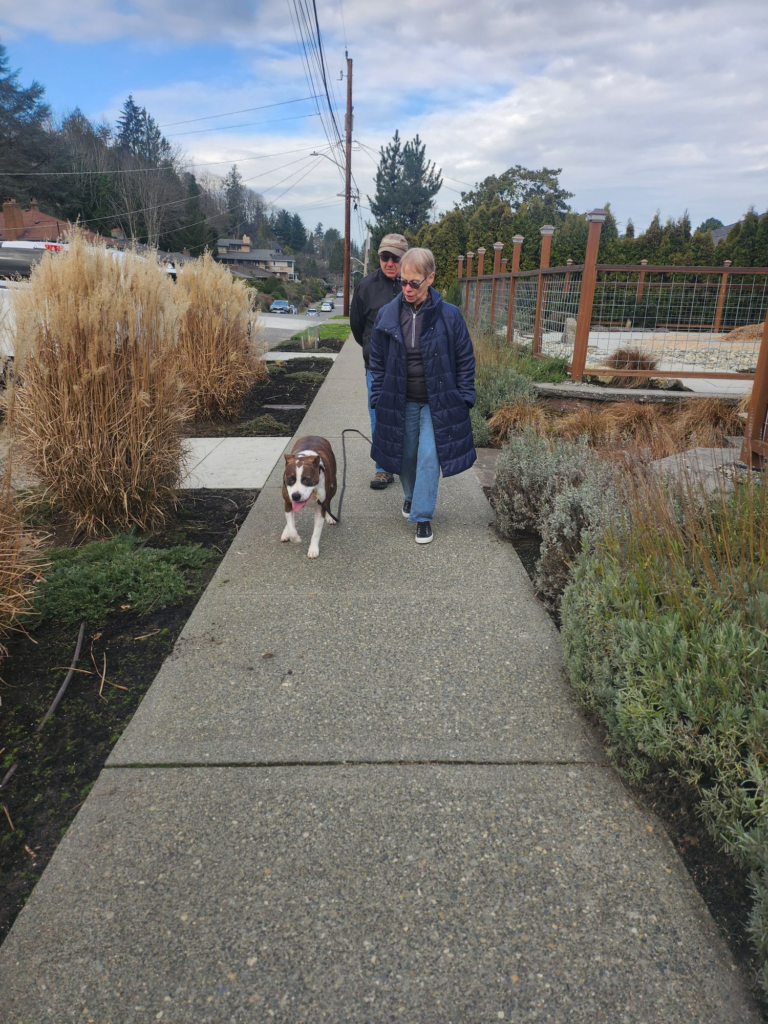
Learning theory gives us principles, but the dog gives us the application.
Two dogs can display what looks like exactly the same behavior for completely different reasons.
That’s why I don’t believe effective dog training begins with asking:
“What method do I use?”
It begins with:
“What is this dog telling me?”
Why I Use Balanced Dog Training
“Balanced dog training” can mean different things depending on who’s using the term.
Here’s what it means at Black Magic Dog Training:
I believe both reinforcement and appropriate consequences have a place in dog training.
We teach dogs what we want by reinforcing desired choices, building motivation, and using rewards that click for that individual dog.
When appropriate, we use training tools and corrections to communicate that certain behaviors aren’t acceptable.
The important words there are when appropriate.
A correction isn’t a substitute for teaching or for genuine training skill.
And making a dog afraid to make any choice at all isn’t the same thing as creating a well-trained dog.
The purpose of balanced training isn’t to punish dogs into obedience.
It’s to create a communication system with enough flexibility to address the whole picture.
I’m Not Interested in Training Ideology
One of my biggest concerns with dog-training ideology is what happens when the dog doesn’t fit the system.
I once watched a former training partner try to force a stressed and confused dog into commands with an e-collar. In their mind they were doing “nepopo,” but they hadn’t done enough foundations and motivation building with the dog in front of them, and refused to pivot when it created confusion.
It was a shame to watch that trainer try to contort that dog into a training style that didn’t work for them. In the end, they wrote the dog off as “too stupid.”
Needless to say, I no longer work with that trainer!
If you’ve already decided that one specific technique must solve every behavior problem, eventually you’re going to meet a dog for whom that technique isn’t enough.
Then what? Do we blame the owner? Do we blame the dog? Do we keep repeating the same exercise indefinitely because our philosophy says it should work?
I’d rather change the plan.
Being evidence-informed means being willing to observe what’s actually happening. Did the behavior improve? Did it get worse? Is the dog understanding the exercise?
Training should respond to evidence—including the evidence the dog gives us.
Results Matter Because Your Life With Your Dog Matters
There’s another side to my philosophy that sometimes gets lost when dog training becomes an academic argument.
People don’t usually contact a professional trainer because they’re fascinated by learning theory.
They contact us because something isn’t working.
They can’t comfortably walk their dog. Their puppy is turning their house upside down. They can’t trust their dog off leash. Their two dogs in the household are getting into fights.
Their dog has developed behavior that is stressful, embarrassing, dangerous, or simply exhausting. Those problems affect real lives.
So while I’m interested in why training works, I’m equally interested in whether we’re producing meaningful change for the person who asked for help.
You deserve to enjoy living with your dog, and your dog deserves communication they can actually understand.

Results Does Not Mean Perfection
Being results-oriented doesn’t mean promising instant transformations.
Dogs aren’t machines, and I don’t seek to treat them as such. Behavior is influenced by genetics, reinforcement history, environment, health, temperament, previous experiences, handler skill, and countless other variables.
Some behaviors can change quickly. Others require months of careful work and management. Some dogs may always require certain accommodations, or hit a “ceiling” for what they’re able to tolerate or learn.
A responsible trainer should be willing to tell you that.
My definition of a successful outcome isn’t creating a robotic dog who never makes a mistake.
It’s creating meaningful, sustainable improvement in the areas that matter to you.
For a reactive dog, success might mean comfortably passing another dog across the street. For a puppy, it might mean learning how to settle in the house.
For a service dog prospect, the standard may be dramatically higher. For a family pet, reliable recall and pleasant neighborhood walks might completely transform daily life.
The training goal should fit the dog and the life you’re actually trying to build together.
Tools Are Tools, Not Philosophies
Because I practice balanced training, I may incorporate different training equipment depending on the dog and the goal.
That can include ordinary leashes and collars, long lines, clickers, food rewards, platforms, toys, training collars, or electronic collars when appropriate.
But I don’t believe owning a particular tool makes someone a dog trainer.
I’m always trying new methods and experimenting with training styles and constantly learning. It’s always my desire to become a better and better dog trainer over time, to better serve my clients and help them be the amazing dog owners they are.
This is especially important to me.
I can teach your dog skills.
But ultimately, I’m not the person who has to live with your dog.
You are.
That’s why Black Magic Dog Training offers different levels of support, including private lessons, daycare training/day trains, and board-and-train programs.
Some owners want to learn everything hands-on.
Some need professional help doing the repetitive training work while remaining involved in the process.
Some dogs benefit from a more immersive training environment.
There’s no moral superiority attached to one format.
What matters is finding a training plan that works for the dog and the human.
And regardless of format, I want owners to understand what we’re doing.
The goal isn’t for your dog to behave beautifully for me and fall apart when they return to you.
The training eventually has to transfer to your hands.

Good Dog Training Should Create More Freedom
Rules and freedom aren’t opposites.
Often, they’re directly connected.
A dog with a reliable recall can safely experience more of the world.
A dog who can settle calmly may be able to accompany their owner to more places.
A dog who walks politely can enjoy longer, less stressful walks.
A dog who understands boundaries can often have greater access to the home and family.
A dog who learns neutrality doesn’t have to experience every passing person or animal as an event.
That’s one of the things I love most about training.
Structure isn’t the end goal.
Freedom is.
Structure is simply one of the ways we get there.
Undying Dedication to the Dog in Front of Me
There are countless dog-training methods, systems, certifications, tools, schools of thought, and passionate opinions about all of them.
I continue studying because I don’t think a trainer should ever decide they’ve learned everything there is to know about behavior.
But ultimately, my responsibility isn’t to an internet argument.
It’s to the dog standing in front of me and the person holding their leash.
I’ll use science to understand behavior.
I’ll use experience to apply it.
I’ll use the tools and techniques appropriate for the individual dog.
I’ll adjust when the evidence tells me something isn’t working.
And I’ll keep the goal focused on meaningful improvements you can actually take home.
That’s the approach behind Black Magic Dog Training:
Dedication to science. Devotion to results. And training built around the dog you actually have.
Find the Right Training Plan for Your Dog
Black Magic Dog Training provides balanced, individualized dog training for families in Kent, Maple Valley, and surrounding South King County communities.
Depending on your goals, your training plan may include private lessons, daycare training/day trains, board-and-train, puppy training, behavior modification, off-leash training, or other personalized support.
You don’t need to know which program you need before reaching out.
You just need to tell me about the dog standing at the other end of your leash.
We’ll start there.